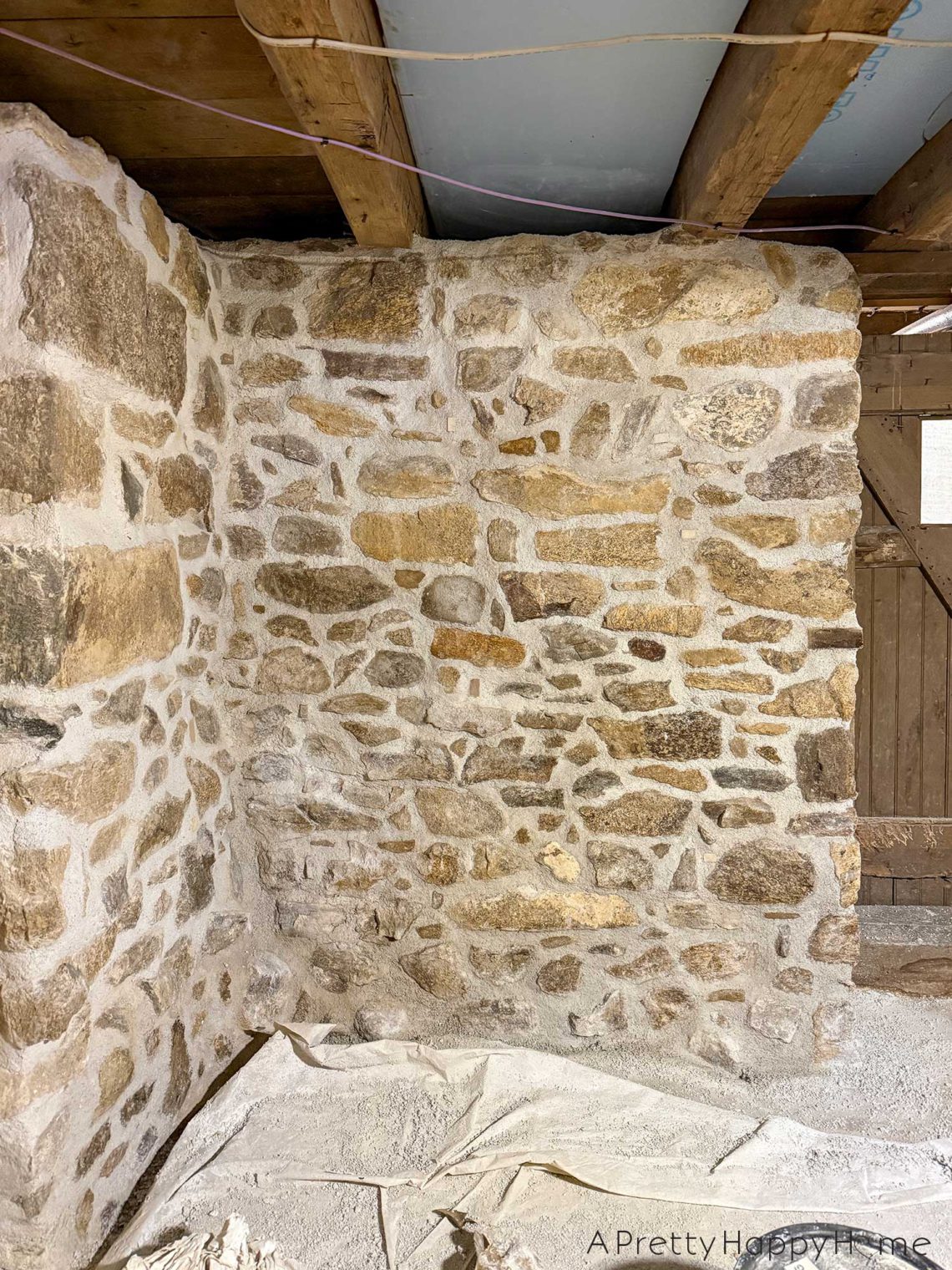
Basement Workshop Stone Repointing: Part 3, Halfway Done
Welcome back to our Basement Workshop Stone Repointing series. This is the third installment of this series. Part 1 and Part 2 are rock-solid bangers, so don’t miss out on that good time.
Today, I’m happy to celebrate being halfway done with this project.
*and the crowd goes wild*
I was unhelpfully thinking the other day that we would have been done already if we had just put our lives on hold and devoted several solid days to the project instead of a few hours after dinner a few nights a week. That’s the kind of toxic thinking a DIYer doesn’t need to indulge. The project will get done when it gets done.
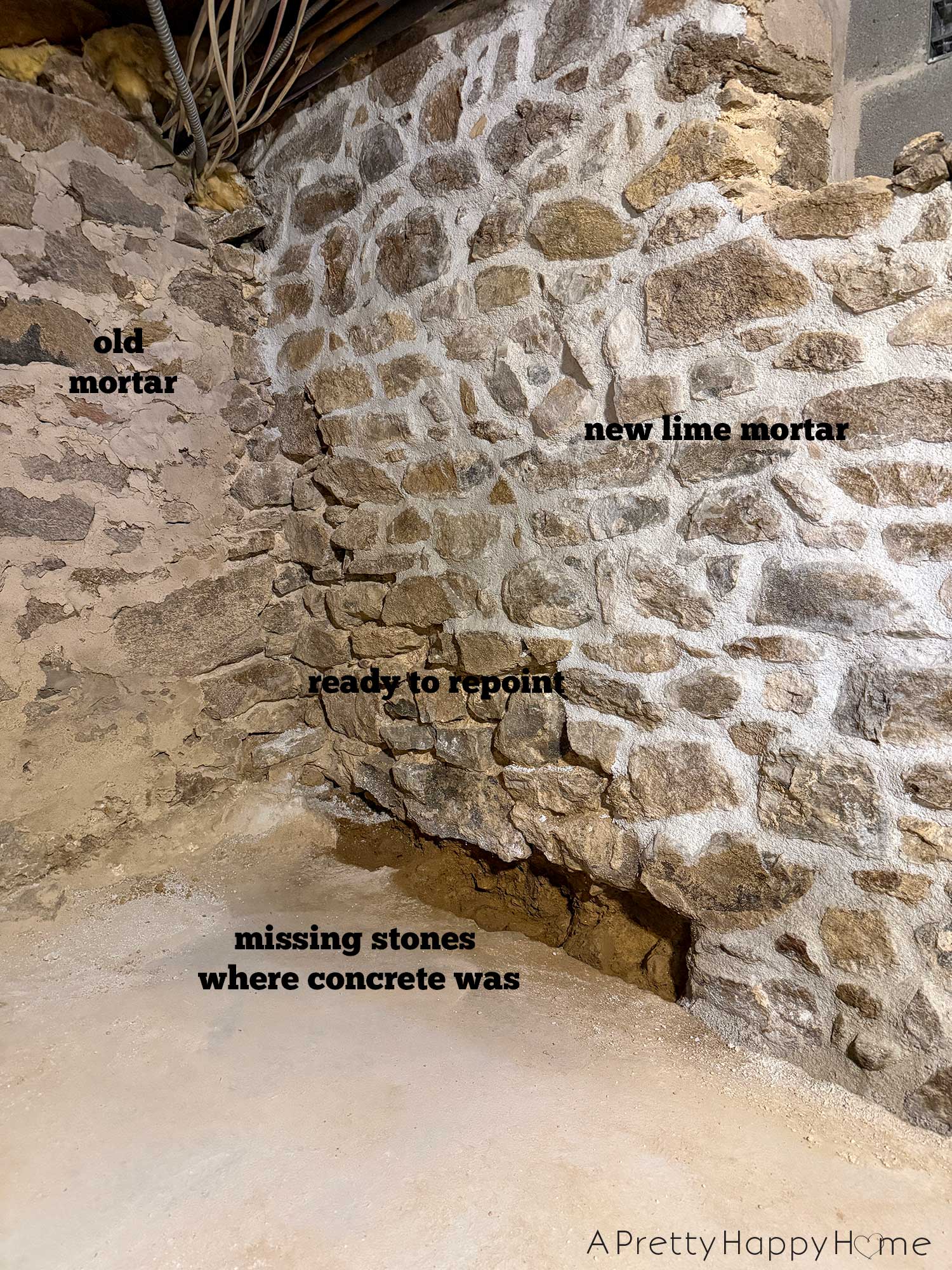
The first half of the basement repointing project didn’t have too much drama, but we did get the opportunity to see how concrete affects our stone foundation. Lucky ducks, I know.
Concrete, because it’s made with Portland cement, isn’t great for historic stone foundations built with lime mortar. It’s harder than the rocks themselves, which can make them break. It’s also brittle, so it can crack when the building moves. But the thing we got to see is, likely, how cement traps moisture in the foundation wall because it’s not breathable like pure lime mortar.
I say likely because there could be additional reasons for moisture in the wall that we haven’t seen yet, but we won’t know to look further until we eliminate the most obvious problem first – the concrete. It’s like going to the doctor, and she says, “It’s probably this, and antibiotics will take care of it in 95% of the cases.” Then you hope you’re not in the 5%.
It takes 28 days for natural hydraulic lime mortar, the type we are using, to cure, so we have to wait that long to see what’s happening with the foundation now that it is repaired in this area. 28 days should put us just in time for all those spring showers to saturate the ground, so bring it on, Mother Nature.
Kidding. I don’t actually want to tempt Mother Nature to do her worst. She’s already given us snow in March.
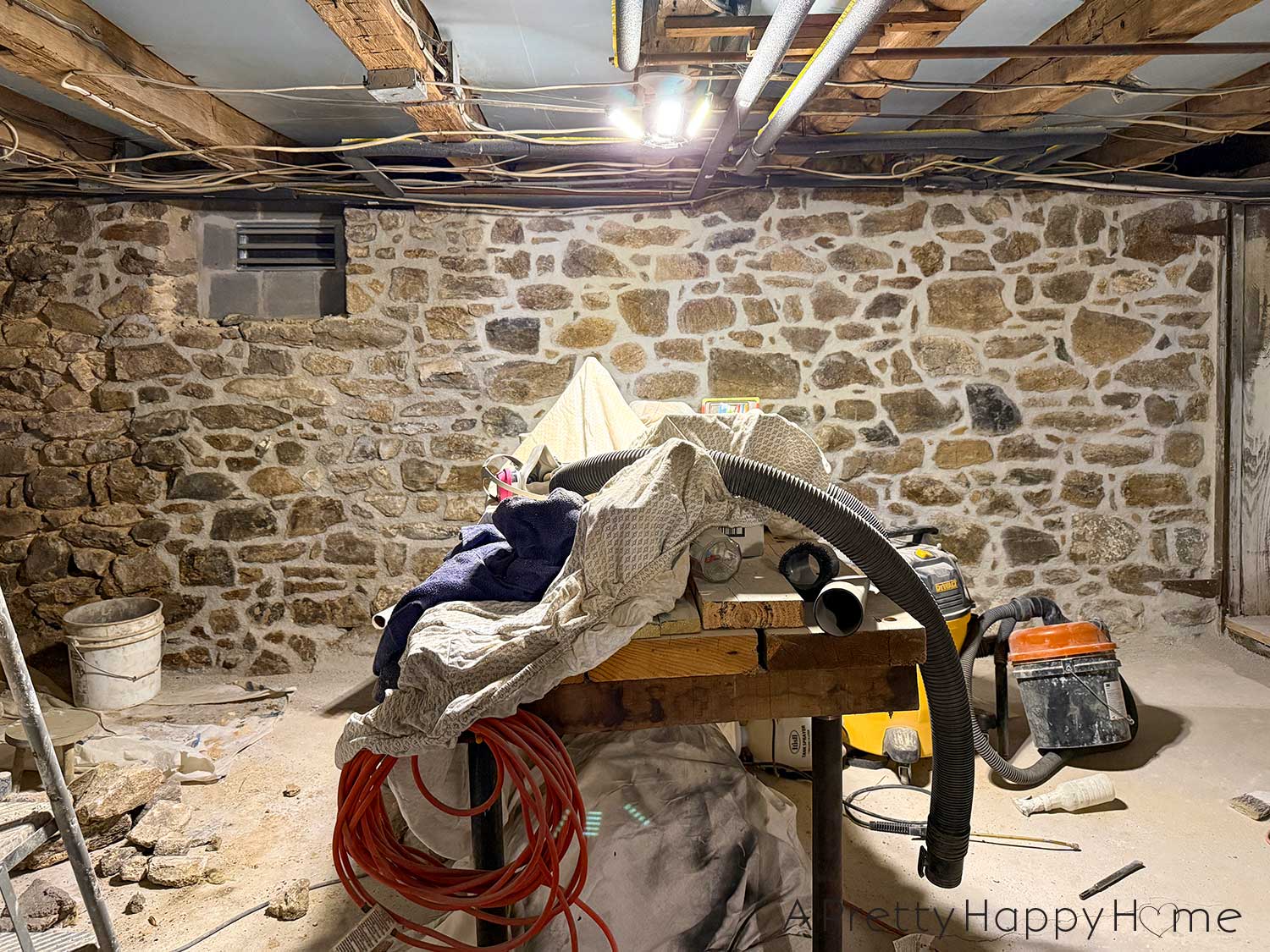
I was only halfway joking about being lucky ducks who get to see what the concrete is doing to our stone foundation. If I had a nickel for every time someone said to me, “Our stone foundation has had Portland cement on it for a long time, and it’s fine,” I could take my family out for a nice fast-food dinner.
(Have you seen how much a drive-thru burger costs these days? Ouch.)
While we trust the overwhelming science, there’s always a small part of our brain that wants to SEE how the science works. That’s really hard to do in this particular case, where the effects of incompatible mortar on a stone foundation can take decades to become apparent. Studying lime mortar is really tricky. There are so many variables involved, time being just one of them. I’ll stick to blogging.
The bonus of oversharing, I mean, blogging is that maybe someone else will learn from what’s happening with our foundation, and another old house will be saved. That would be pretty cool.
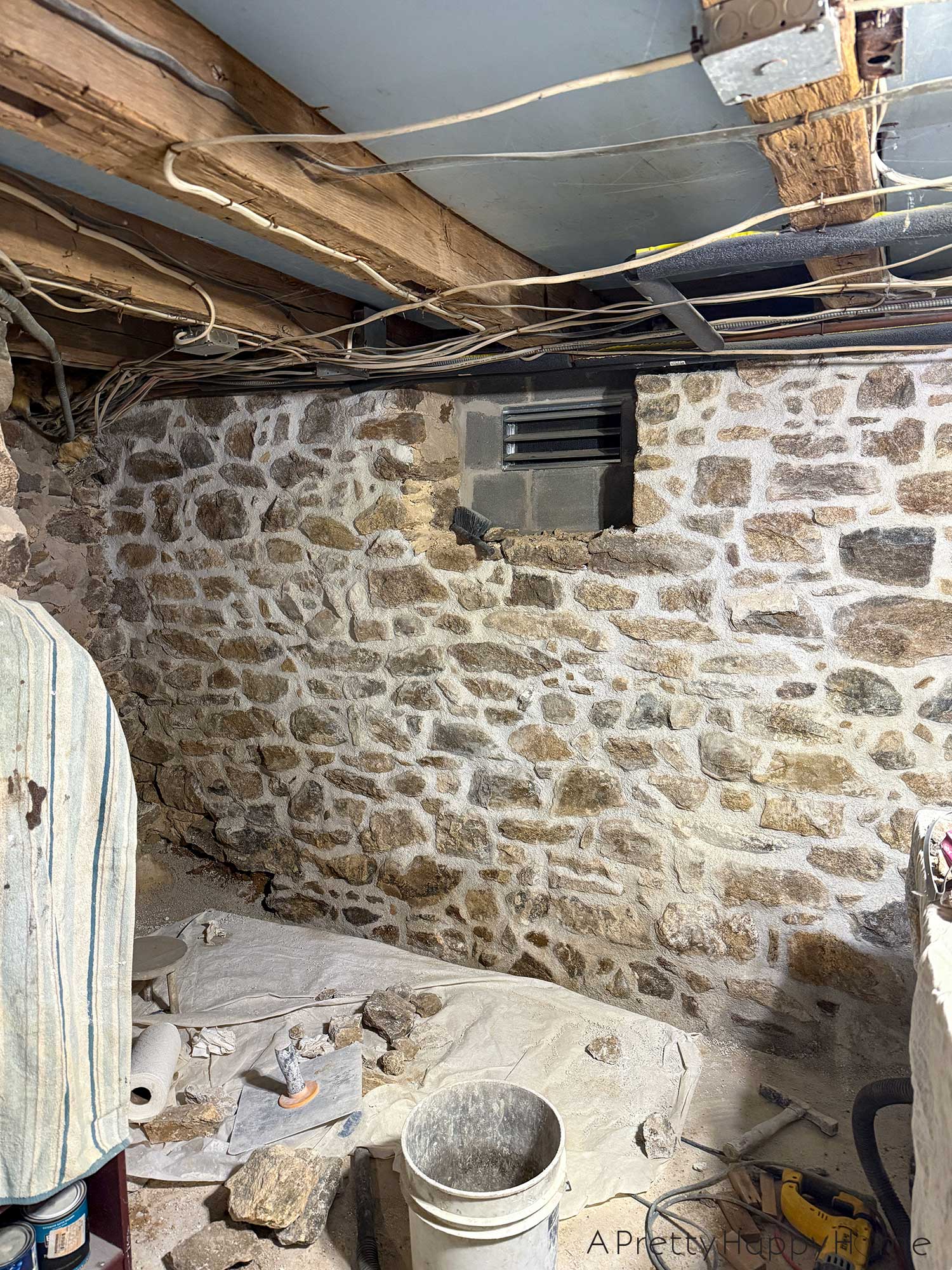
If you notice in the above pictures, there is a vent surrounded by blocks. That vent provides airflow to the front porch foundation. Those blocks aren’t supporting the joist above them very well. The good news is we can fix it. The bad news is we are saving that for last. Procrastination for the win.
Do you procrastinate on your projects, too? I’d love to know. Comments are like scientists when they all agree on something. It’s a reason to celebrate. You can comment on this blog post, email me here, or reach out via direct message on Instagram or Facebook.
For questions about where we buy our lime, what type of lime, etc., please reference our Lime Mortar FAQs.
Thank you for following along with our DIY adventures. If you’d like another blog post to read, try one of these.
Basement Workshop Stone Repointing: Part 1, Why Now
Basement Workshop Stone Repointing: Part 2, The Concrete Problem


You May Also Like

Painting Ceilings is Super Fun

European Inspired Home Gym With RitFit Smith Machine
