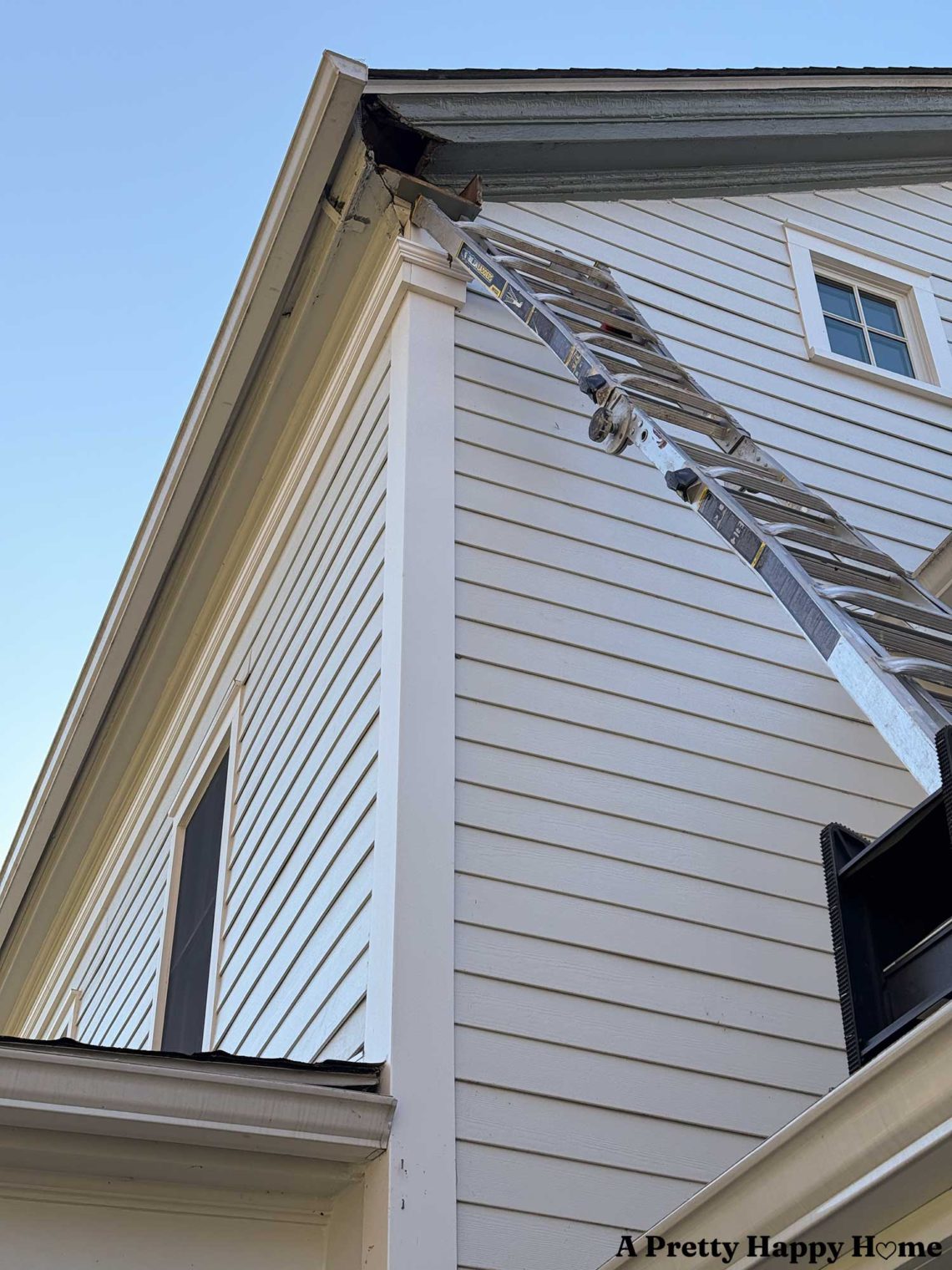
Repaired Gable Return on a Greek Revival
Did you know gable returns are a defining feature of Greek Revival-style architecture in the United States? We recently repaired a gable return on our Greek Revival, which ended up being a doozy of a project, so we’ve gotten an up close and personal look at this stylistic architectural feature.
While not universal, gable returns are commonly found on Greek Revival-style homes built in the United States between 1830 and 1860.
Gable returns or eave returns, as they are sometimes called, are an extension of the roof trim or cornice that turn the corner at the bottom of the gable. They are purely decorative for homes built in the U.S., but they are built to mimic the look of classical pediments of Greek temples.
But wait! Isn’t your house older than that?
Yes, it is. Thank you for remembering. The oldest part of our home dates back to the 1780s, and would have been called a folk-style house. However, it has been added onto multiple times since then. Each addition is a reflection of the current trends of the time.
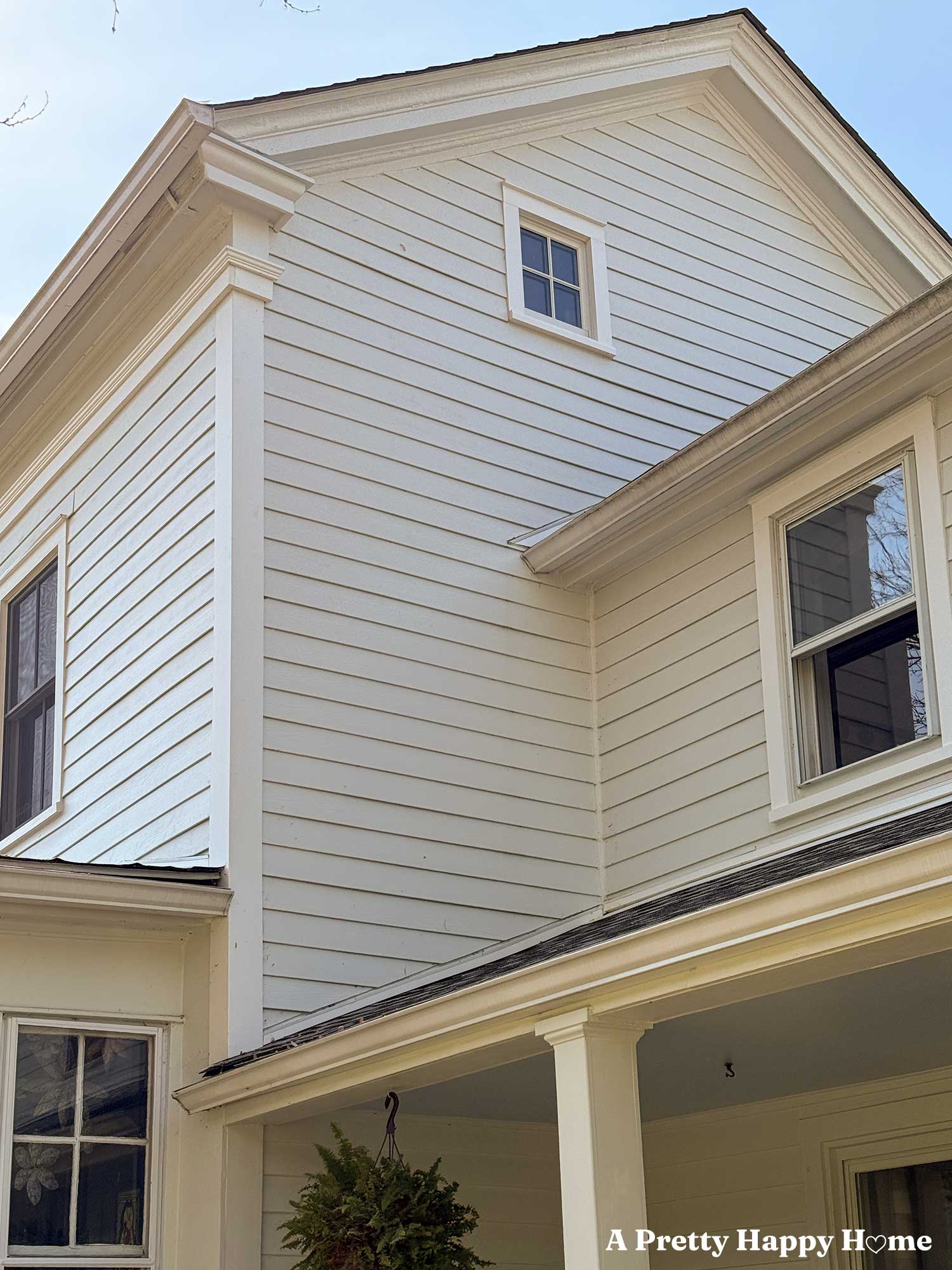
Our living room addition (the tallest part of our house) was built, we think, in the 1830s or 1840s and does have characteristics of Greek Revival style. In addition to the decorative gable returns, it also has a wide band of trim under the roof line called a frieze band.
Other common Greek Revival architectural elements can include a front gable and columns. Obviously, we don’t have those though because a style mash-up is much more the name of the architectural game around here.

The maintenance problem with gable returns.
Gable returns are a gorgeous architectural detail of Greek Revivals, but they do present a maintenance problem for homeowners.
If the gable returns on other Greek Revival-style homes are anything like ours, you can think of them like a small ledge with crown molding underneath that protrudes from the house. It’s actuality, it’s more complicated than that, as ours was more like a box built with several pieces of wood to get the angles and the depth correct so that the return hung prominently away from the house.
The ledge is the maintenance issue because, even if it is slightly sloped, snow and ice can sit on that ledge. Eventually, it’s going to rot the wood ledge or the roof trim running into the ledge if the paint and wood seams are not meticulously maintained.
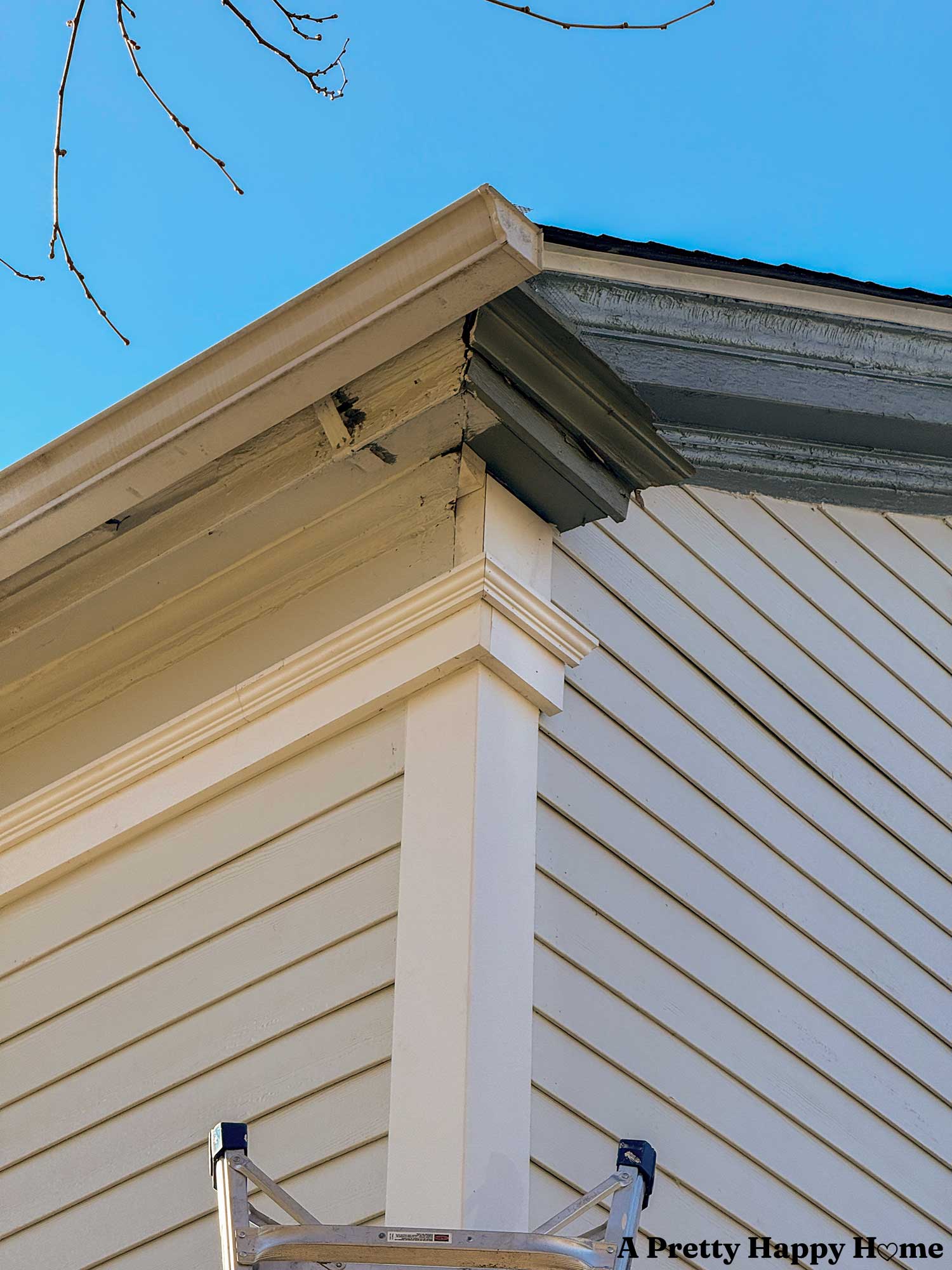
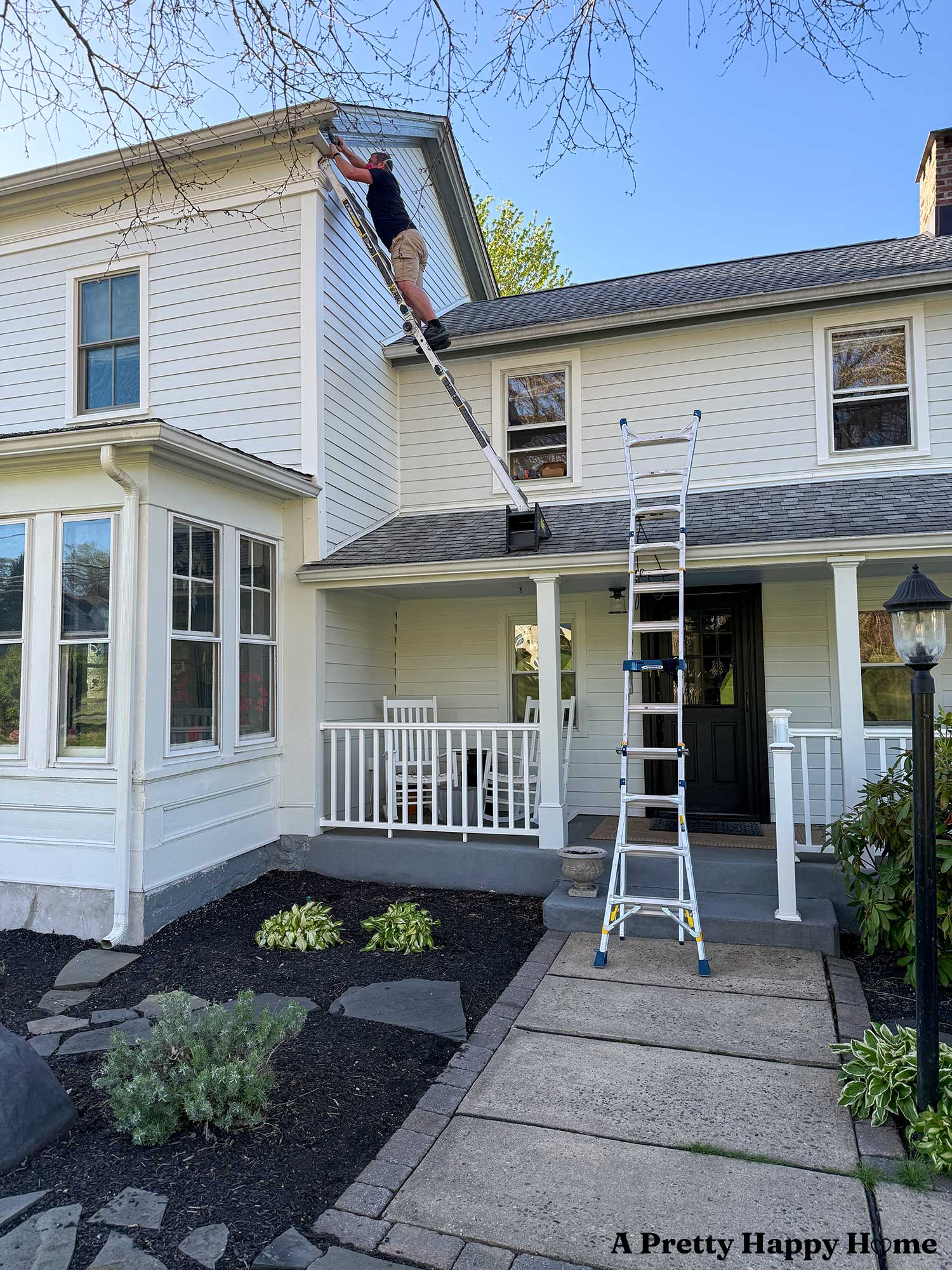
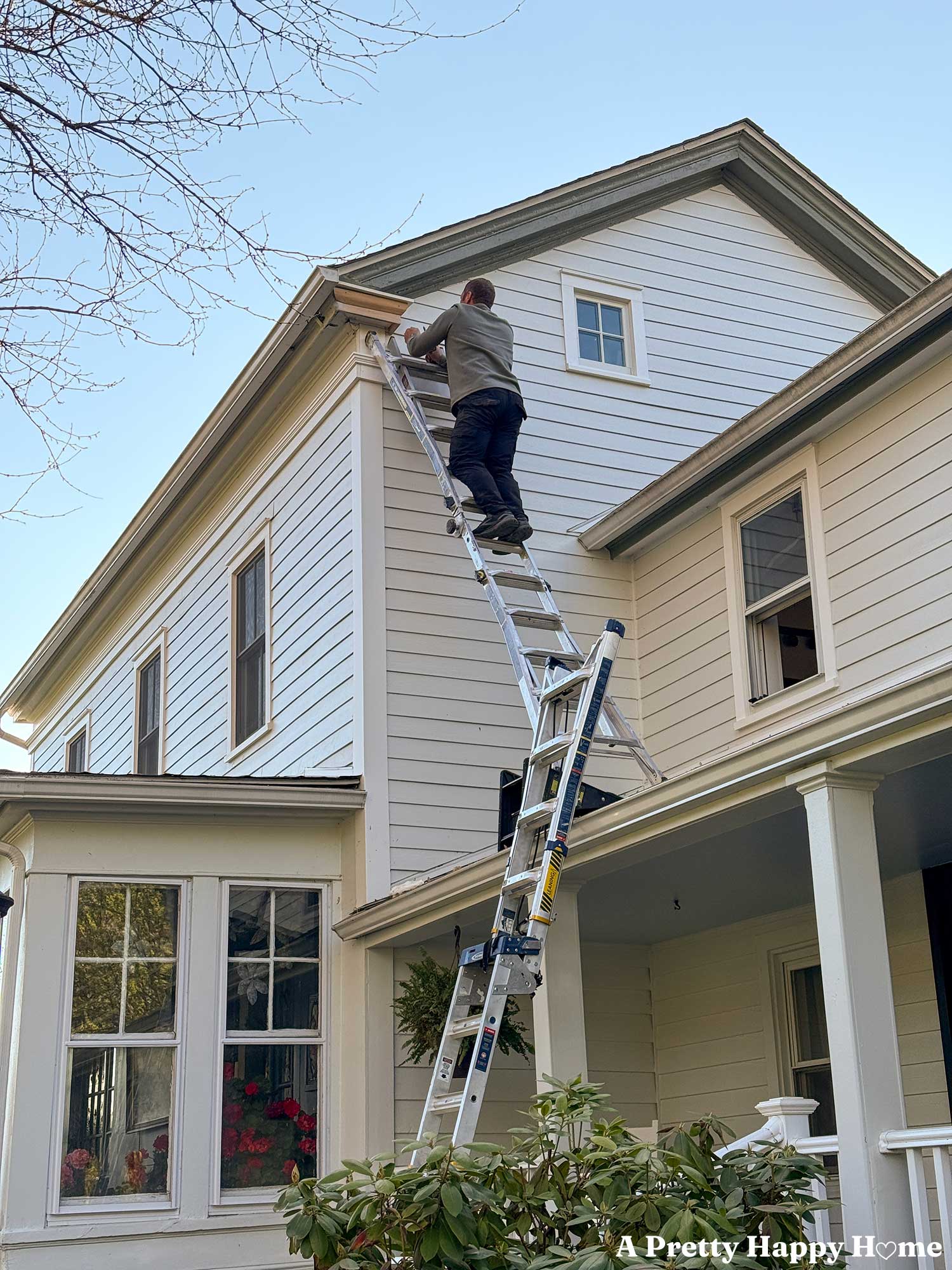
Do you know how hard it is to maintain something on your house that is 30-feet off the ground and only accessible by a rickety ladder?
Our tallest ladder extends 22-feet, and that is already way too high, thank you very much.
I can tell you this architectural detail has long been a thorn in the side of every homeowner who has owned this house because we have six gable returns and they don’t match. One by one, they’ve had to be replaced, and it’s not like it’s easy to match the profile of historic trim.
The envelope problem with gable returns.
If our house is built similarly to other Greek Revival-style homes, then the gable return isn’t structural, but it is part of the “envelope” protecting the structure or framing of the house.
There is no sheathing or siding behind the gable return. If you remove it or if rot creates a hole in the gable return, then you can see right into the attic and the framing is now exposed to the elements.
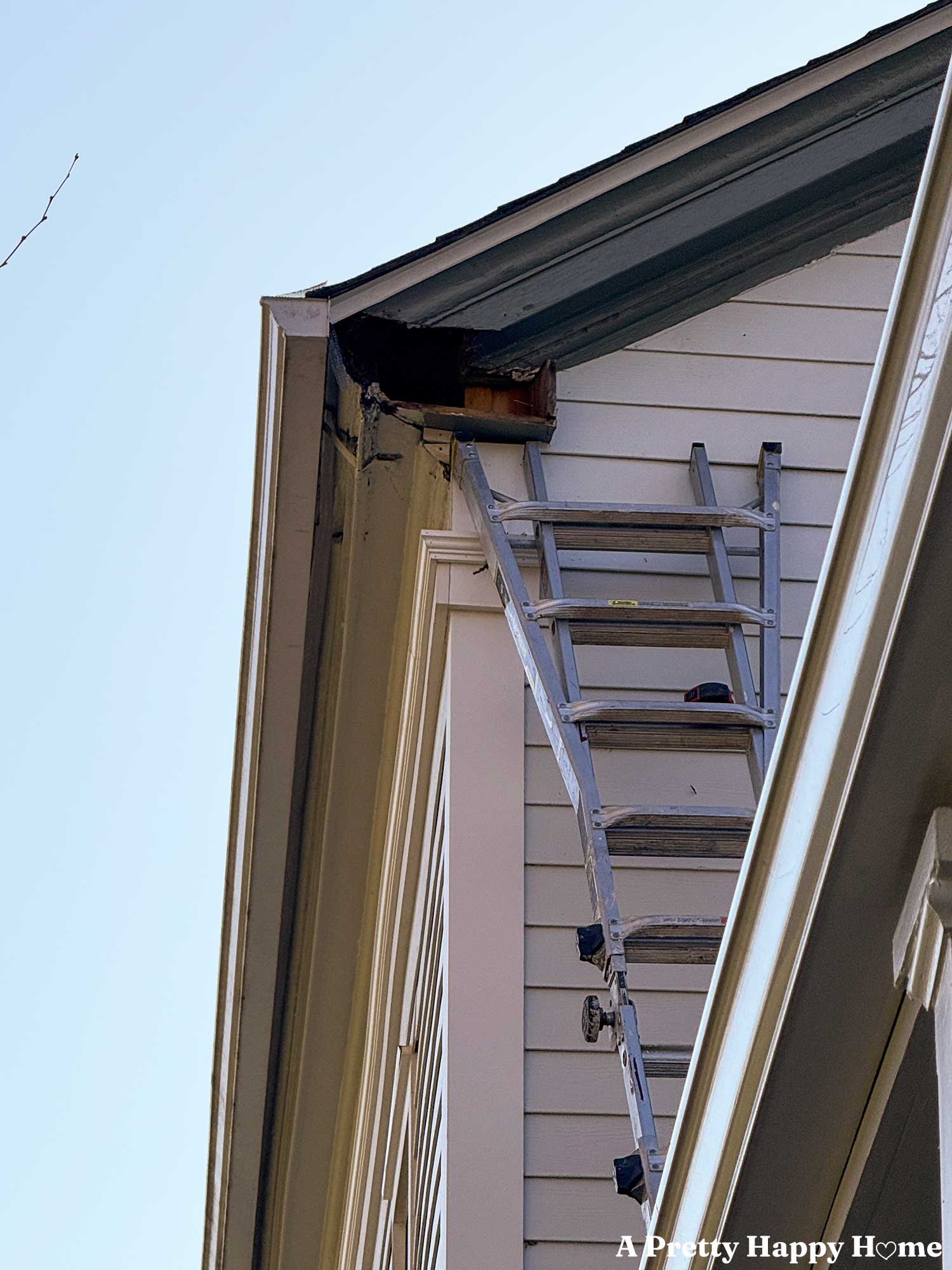
If you can see right into the attic, guess what else can see right into the attic? Not only see, but fit?
Squirrels.
A rotting gable return is an open invitation for squirrels to move right into your attic. Ask me how I know.
No, don’t. It’s too soon.
How we fixed the envelope problem with our rotting gable return.
This is where things are going to get controversial for the old house purists in the audience. In fact, if you’re one of them, just skip to the end. I don’t want to unintentionally rage bait you.
We cannot eliminate the ledge part of the gable return. It’s part of the charm! What we can do is insert some added layers of protection for the home’s framing in the event the gable return fails or rots again.
The first thing we did was install sheathing of sorts over the exposed opening into the house. It was approximately 6 x 8 inches in size. To do this, we used 1-inch thick flat stock PVC trim because it shouldn’t rot. The PVC on an old house is the controversial part, in case that wasn’t clear.
The PVC protecting the house is wrapped in cedar trim that we recreated as best we could to match the profile of the trim that was on the original, rotting gable return. All of the wood trim on this house is cedar, so that’s why we used that particular type of wood.
Handy Husband ended up hand-planing the cedar into the profile that closely matches what was originally there so that when the trim was joined at a 45-degree angle to the existing trim on the front of the house, the profiles lined up. Then he had to do it again for the second piece of new crown that returns back into the house.
If you’ve never seen someone hand plane a piece of wood, they are basically shaving off small slices of the wood using a hand tool until they reach the desired shape. It’s an art that may or may not be assisted by a little bit of sailor language.
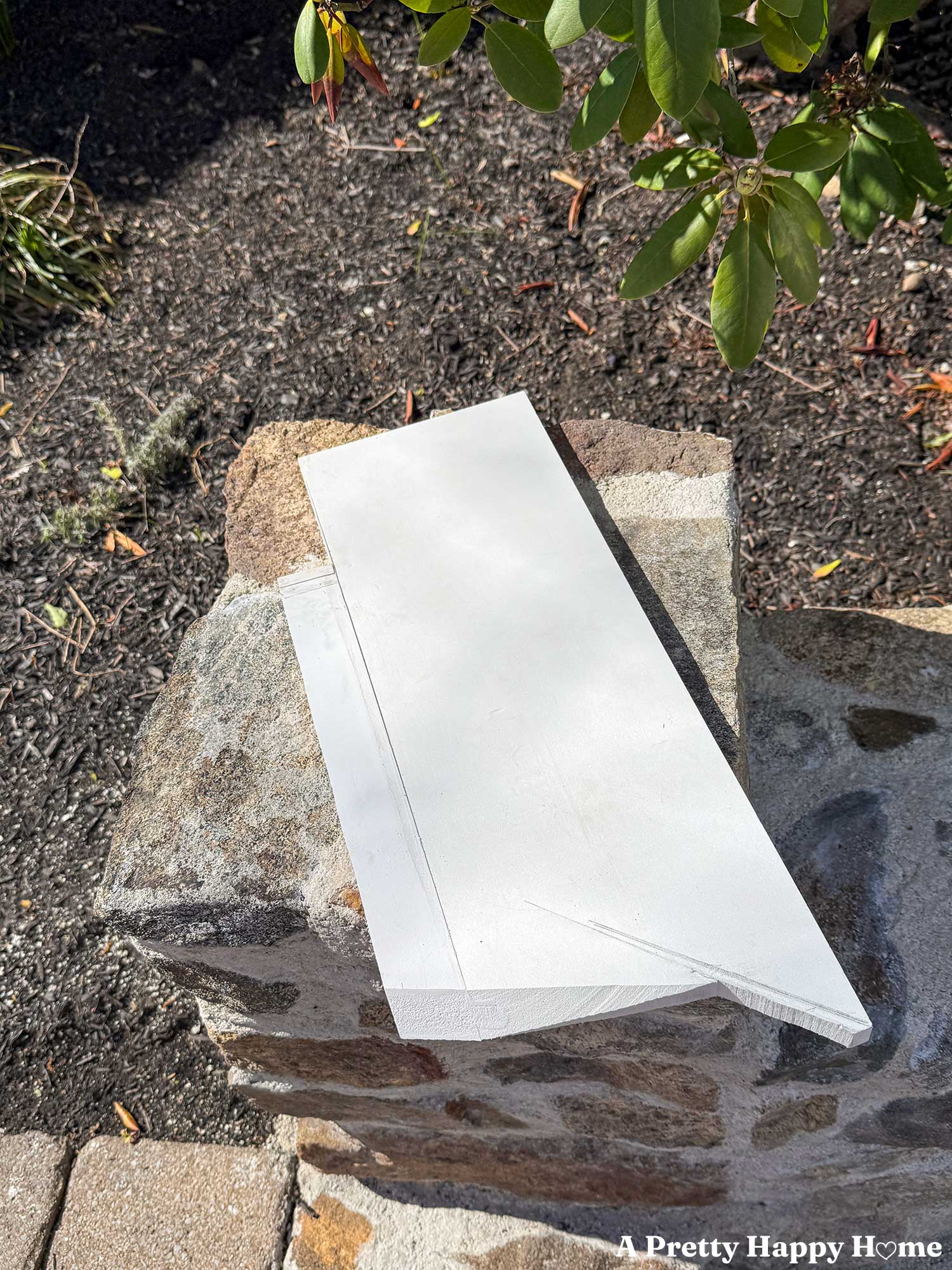
We had already committed the old house sin of using PVC, so we might as well go all in with this transgression. The new ledge of the gable return is also PVC. The ledge is necessary so that the fancy trim of the gable return, think of it like crown molding, is covered on top. We were determined to make it one piece (it used to be three) to minimize opportunities for water to infiltrate the house.
The ledge is also sloped away from the house slightly to aid water in running off of it.
In case you think this was easy, the photo below shows the shape of that ledge piece. Handy Husband had to figure out how to make this odd shape while perched on a ladder on top of our front porch roof.
To say it took more time than we estimated would be an understatement.
We think of this fix as future proofing. Even if the cedar trim rots, the ledge above and the sheathing behind it are PVC and should protect the guts of the house – the framing – until the gable return repair can be made.
Plus, now that everything is painted with the best paint and primer available in 2026, no one from the ground can tell that it’s not wood, and it looks remarkably close to the original – minus the rot.
Deferred maintenance makes all house problems worse.
I have a theory that deferred maintenance is a greater threat to homes than catastrophic events. I have no way to prove this, of course. I have just observed how quickly homes fall into disrepair due to deferred maintenance.
And I get it. In fact, we’ve been guilty of it. (Squirrels in the attic, remember?) It’s not because anyone wants bad things to happen to their home. It’s just that regular home maintenance takes time, knowledge, and money. Most of us are short on at least one of those things these days.
In our stewardship of this almost 250-year-old house, we are trying to find a balance between how do we best protect it given our current circumstances while doing right by its history and character. We may get it wrong from time to time, but I know that the things we have done are not permanent and are in service of protecting what is truly original – the framing, foundation, and floors.
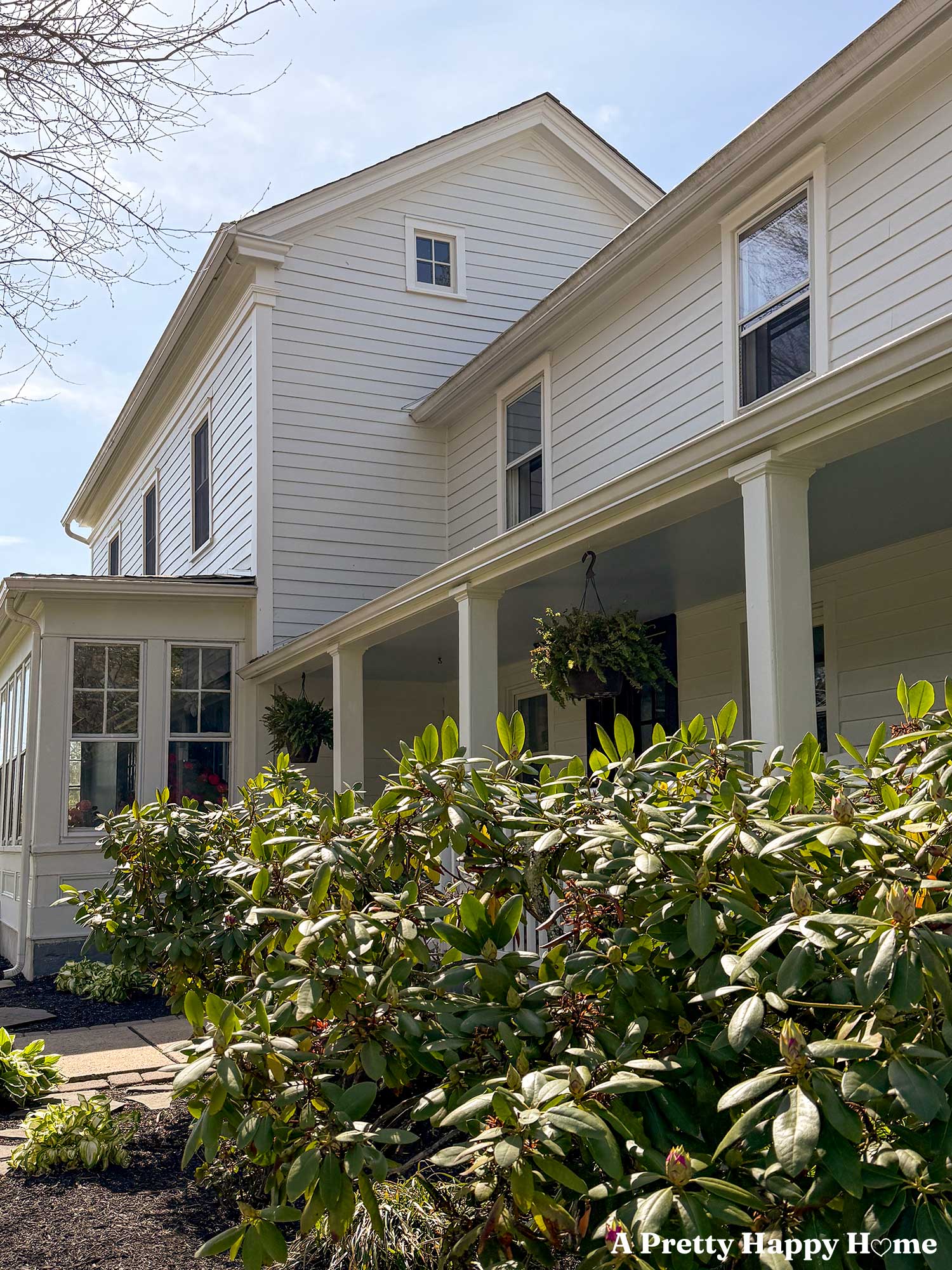
Do you also live in a Greek Revival? Have you had squirrels in your attic? Are you struggling to stay top of your home maintenance, too? All I can see when I look at these photos now is that I need to clean the outside of our gutters. Ha!
Anyway, tell me everything. I love oversharing. You can comment here on this blog post, email me here, or reach out via direct message on Instagram or Facebook.
Happy DIYing!
P.S. A great resource for learning about the home styles in the United States is the book “A Field Guide to American Houses” by Virginia Savage McAlester. I checked it out from my public library.

(image: Amazon)
Thanks for getting nerdy with me over house trim today! Here are some other posts you might enjoy.
All About Rim Locks – old house hardware
All About Our 240-Year-Old Pumpkin Pine Floors
I’m Keeping the Ruby Glass Chandelier
*affiliate links in this blog post*


2 Comments
Nancy B
That is some seriously impressive craftsmanship. I think the correct term for the use of PVC in this case is smart.
It really looks nice, great job once again, you two!
annisa
Thank you so much! Handy Husband did a really great job. Let’s hope we never have to do this one again.