
How I Used AI to Successfully Hire a Contractor
I recently used AI to hire a contractor, or rather, help me hire a contractor, and that’s the kind of assistance I could used to.
Finding a good contractor – any contractor, really – is so hard.
One unfortunate universal human experience seems to be that homeowners have a hard time finding and hiring good contractors. We all have stories. Ugh. So. Many. Stories.
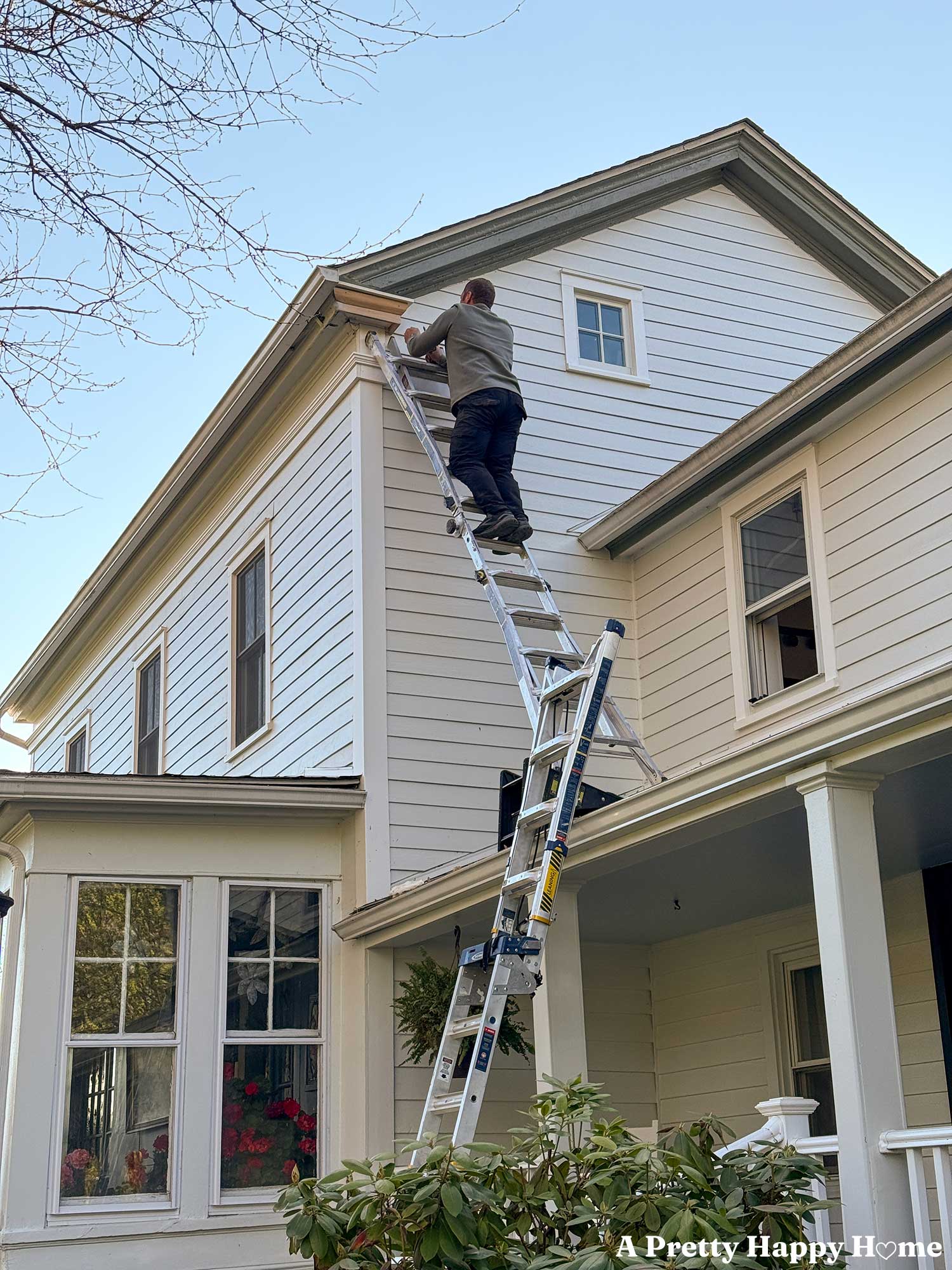
I needed to hire a painter to paint the trim along our roofline. It was a small job square footage-wise and it was all 30-feet in the air. Plus, there might be some rot to deal with. “Super fun,” said no one.
I had been ghosted multiple times by painting companies while trying to get quotes, so I got discouraged and moved the project to the back burner.
Fast forward a year, and squirrels had gotten into the attic, so there was definitely some rotten trim. This project was now our number one priority because I draw the line at sharing my house with squirrels. They are not considerate house guests.
The good news is that AI had improved drastically in that year. My feelings on AI are complicated to say the least, but using it was a game changer for getting back on track with this project. Suddenly, the overwhelming task of tracking down contractor leads didn’t feel quite so overwhelming because I had help. If the first round of leads ghosted me (they didn’t), then I’d use AI to help me find more.
Here are my tips on how to use AI to hire a contractor you are comfortable with.
3 Ways to Use AI to Find the Best Local Contractors
If you want to weed out the bad leads to find a contractor you can trust, you have to treat AI like a research assistant. Here are three prompts and strategies that worked wonders for me.
1. Get Project-Specific Contractor Leads
Generic searches get generic results. If you have an older home or a specialized project, a standard “painters near me” Google search won’t be helpful. You need a contractor who respects your home and the vision you have for your home, and that requires being very specific in the research you ask AI to help you with.
The AI Prompt to Try: (feel free to copy and paste)
I am looking to hire a contractor for the following project: [Describe your project in 1-2 sentences, e.g., ‘I need the exterior of my 1920s wood-sided house repainted, including prep work and minor wood rot repair.’]
Based on this, find the top [3 to 5] local [contractor type, e.g., painting companies] that service [Your City or County] whose website or reviews explicitly mention [Keywords important to you, e.g., historic restoration, cedar shingles]. Analyze their online portfolios for projects involving [Specific details of your project, e.g., homes built before 1950]. Provide their contact information and the specific reason why you think they fit the parameters of this job.”
Be specific as possible while defining your project and what you are looking for. This gives the AI context and ensures your leads are, in theory, contractors who have successfully handled a project that looks like yours.
Generating contractor leads is fact-based research. The next step is to have the AI check their work, by helping you vet the leads. Breaking up the steps can prevent the AI from getting lazy in their research. It’s a relatable, but annoying quirk.
2. Vet the Leads With a Sentiment Analysis
For normal people with a million things on their plate and squirrels in their attic, meticulously combing through 200 reviews for five different companies is a sure way to bring on a headache. Plus, review scores are often misleading. A 5-star company might just be good at asking for reviews, while a 4.2-star company might be a master craftsman who is just bad at technology.
Instead of combing through the reviews yourself, use an AI tool with live web access (like Gemini’s Deep Research or ChatGPT with web browsing) to do the heavy lifting on further vetting the list of contractor leads they already generated for you.
The AI Prompt to Try:
“Search for [Contractor Name] in [City, State]. Read up to their top 30 recent reviews across all platforms. Create a ‘Pros and Cons’ summary based on customer sentiment. Do they [insert something important to you e.g. have a pattern of finishing late, or are they consistently praised for their daily cleanup?]”
Instead of being swayed by one angry 1-star review, the AI will find the statistical patterns. If the AI notes that “80% of reviews mention excellent prep work” or whatever was important to you, that’s a good sign that you’ll want to call that contractor to schedule a quote appointment. Hopefully, they answer the phone!
By the way, 30 is enough reviews to start to be statistically relevant, but I only know that because I asked the AI what a good number was. Ha!
3. Ask AI to Write a “Scope of Work”
I’d venture to guess that scope creep and miscommunication are among the top causes of homeowner-contractor disputes. Take a cue from how commercial construction minimizes this problem by asking the AI to write a scope of work or statement of work document that you can give to the contractor.
I usually have a list of things I need to remember to ask the contractor about written down on a sticky note, but that’s not super thorough, and sometimes, I can’t read my own handwriting. True story.
Tell your AI the size of your house, the number of rooms, the type of surfaces, and any specific issues (like peeling paint or high ceilings). Ask it to generate a professional Scope of Work. When you hand a contractor a printed, bulleted list of your expectations before they even write their bid, their reaction will tell you a lot about who you’re working with.
It should help them prepare a highly accurate bid for you, and they might have suggestions on best practices or ways to make the project even better. Crazier things have happened.

Red Flags: What AI Gets Wrong About Contractors
As amazing as AI is at gathering data, it is not a magic wand. Here are a few red flags where the AI’s digital brain hits a wall:
An AI might look more favorably on a company that has a slick website with lots of keywords and Search Engine Optimization (SEO). They will assume the contractor can back up all those claims, but you have to verify this.
AI doesn’t know a contractor’s schedule or how far out they are booked. They don’t know how good they are at communicating or returning calls unless that’s something mentioned in the reviews.
AI can only find what is digitized. The absolute best contractor in your town might be a guy who has been in business for 30 years, gets all his work by word-of-mouth, and doesn’t even own a computer. AI will completely miss him.
The “Trust But Verify” Checklist
AI might be your research assistant, but you are still in charge. Never sign a contract without doing at least these three manual checks:
If your gut says something is off when they walk onto your property, trust your gut.
Did the AI find “recent” portfolio work, or are all their good photos from 5 years ago?
AI can’t always see if a license was suspended yesterday or if they have a history of failed permits in your specific town. Call your town’s building department to verify. You can also ask the contractor for proof of insurance.

What AI Cannot Do
While AI is an incredible research assistant, it cannot replace the human element – YOU – of hiring a contractor. It’s important to remember where the tech stops and your responsibilities begin:
Make the Phone Calls: AI can hand you a perfectly curated list of names and numbers, but it cannot make the calls to set up appointments or request quotes. You still need to pick up the phone, verify their availability, and handle the scheduling.
Meet the Contractor: AI cannot walk your property with a contractor. It can’t assess if they showed up on time, if they treated your home with respect, or if their communication style meshes with yours. You have to trust your own intuition.
The Final Contract Review: Yes, an AI can read a dense bid or contract and summarize it for you. However, it is never a substitute for you going over the document with a fine-tooth comb. AI might overlook a crucial missing detail that could cost you hundreds of dollars later.
Bonus: The Free “Scope of Work” AI Template
Don’t let the idea of a “Scope of Work” intimidate you. You don’t have to write it from scratch. Copy the template below, paste it into your preferred AI tool alongside a description of your project, and let the AI fill in the blanks. This is a painting edition, since that’s the type of work I needed to be done, but you can adjust it to fit your specific project needs.
The Homeowner’s “Scope of Work” Cheat Sheet (Painting Edition)
Project Name: [e.g., First Floor Interior Repaint] Homeowner Name: [Your Name] Property Address: [Your Address]Target Start Date: [Ideal Date]
1. Project Overview
Example: Preparation and painting of the main living room, hallway, and interior front door, including all walls, ceilings, and baseboard trim.
2. Specific Areas to be Painted (List every single surface. If it’s not on this list, assume it’s not getting painted!)
Room 1: [e.g., Living Room – Approx. 15x20ft]
Walls: [Yes/No]
Ceiling: [Yes/No]
Trim/Baseboards: [Yes/No]
Room 2: [e.g., Main Hallway]
(Repeat surface list…)
3. Prep Work Expectations (Be specific about what needs fixing before the paint goes on.)
Surface Repairs: [e.g., Patch 3 small drywall holes; caulk gaps around baseboards.]
Furniture Clearing: [e.g., Homeowner will move small items. Contractor is expected to move heavy furniture to the center of the room and cover with drop cloths.]
4. Materials & Finishes
Paint Sourcing: [e.g., Contractor to provide all paint and materials.]
Brand Preference: [e.g., Benjamin Moore, Sherwin-Williams]
Finishes: [e.g., Walls: Eggshell | Trim: Semi-Gloss | Ceiling: Flat]
5. Logistics & Cleanup
Daily Cleanup: [e.g., All tools and drop cloths must be neatly stored or removed at the end of each workday.]
Trash Disposal: [e.g., Contractor is responsible for hauling away empty paint cans and masking tape.]
Final Thoughts
AI won’t swing a hammer, hold a paintbrush, or make dinner (that’s what I really want it to do), but it can be a helpful research assistant right now. By using it to find and vet contractors, you can take some time and frustration out of the hiring process.
Try it on your next project, and let me know in the comments how your AI assistant performed! You can comment here on this blog post, email me here, or reach out via direct message on Instagram or Facebook.
Happy Hiring!
Thanks for spending part of your day with me. Here are some other blog posts you might enjoy.
6 Split Ceiling Medallion Installation Tips
Chest Freezer Organization Tip
10 Tips for Building an Outdoor Ping Pong Table Using Cement Board


You May Also Like

Wood Planter with Leather Handles

Upcycled Tic Tac Toe
