Maple Seedlings Make Their Own Sunscreen & 4 Trees We’re Growing
Seedling maple trees have a cool trick to protect their fragile new leaves from the sun. They can make their own “sunscreen.”
Are you kidding me? I wish I could do that.
I learned that cool fact this week after riding the rollercoaster of “will it or won’t it live” for a volunteer maple tree we’ve been watching grow. The emotional investment is getting out of hand.
The Maple Tree’s Origin Story
In the summer of 2025, we noticed a maple tree was growing out of a potted fern we had on our deck. This wasn’t completely unexpected since there is a giant maple tree in our backyard. What was more unexpected was that we decided to keep the tree and see if would survive the winter.
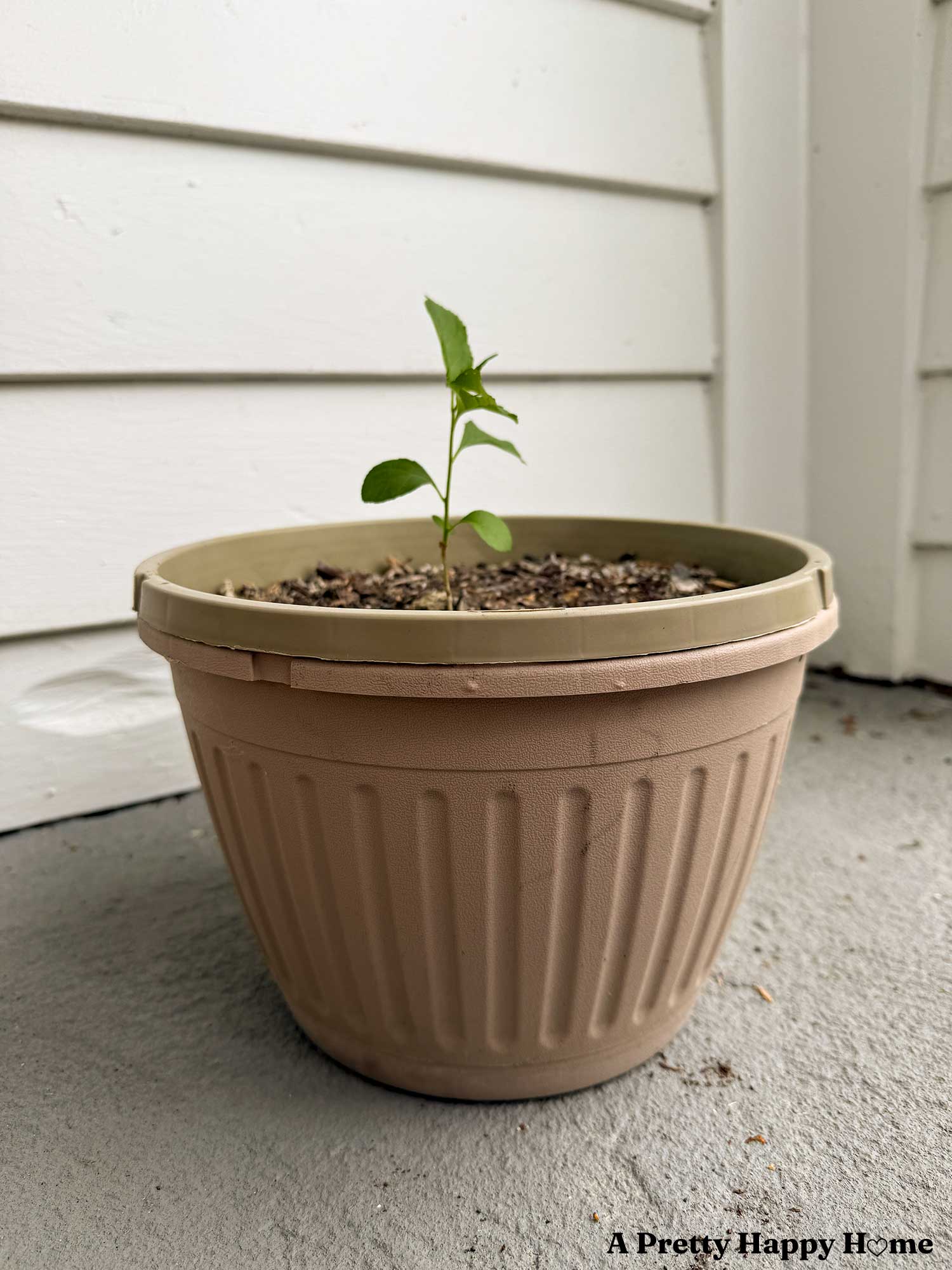
We replanted the maple tree in an old planter, and left it to winter on our front porch. It was so tiny, and this was a way to protect it from the lawn mower and animals. We placed the tree on the end of the porch that is covered, but receives plenty of south-facing light and does receive moisture when it rains or snows.
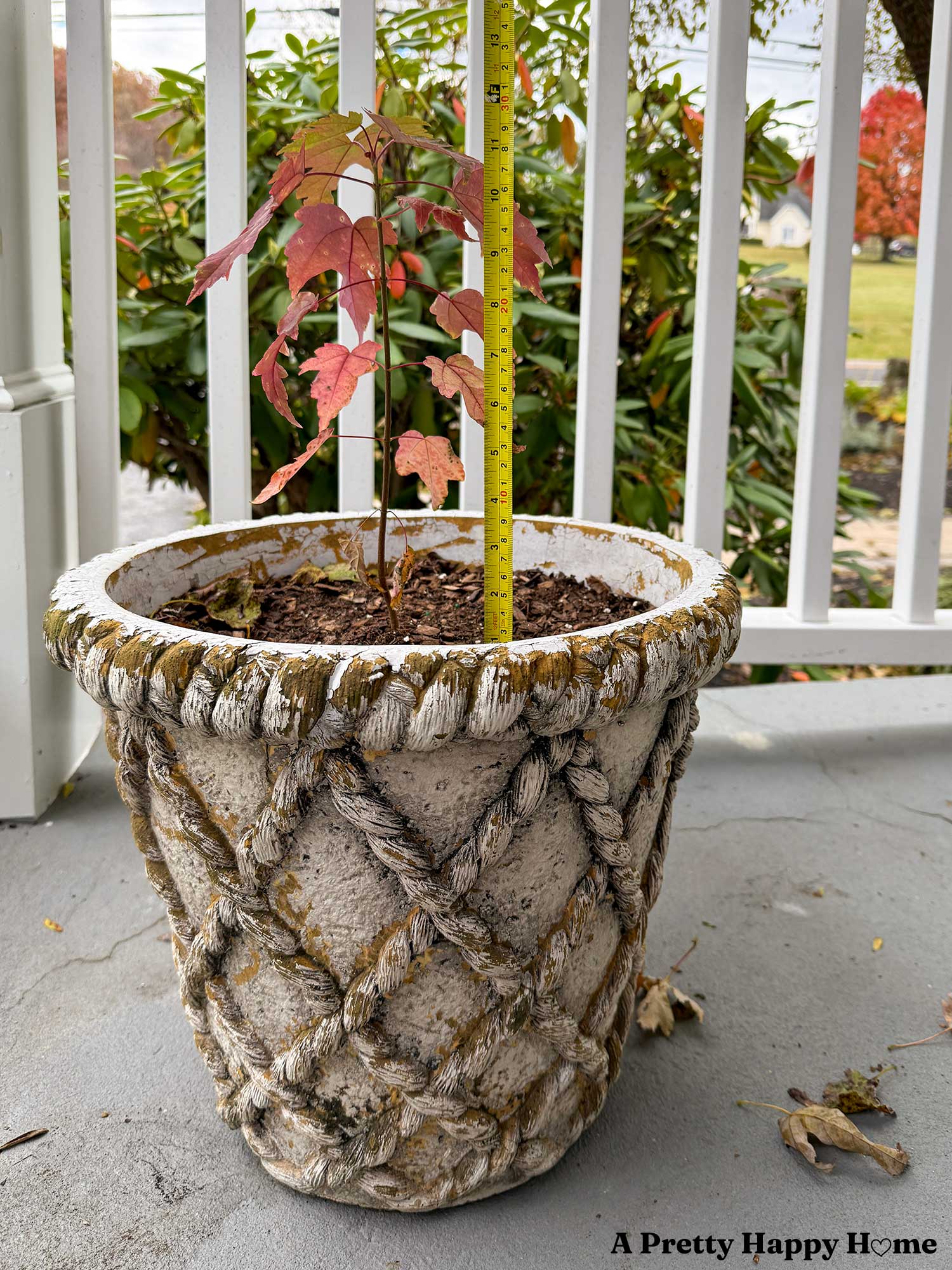
Here it is in November 2025 not long before its leaves dropped. I measured it like a proud mama marking her kid’s height on a growth chart.
Seedling Sunscreen – It’s a Cool Tree Trick
When the maple seedling finally started to leaf out this spring (2026), we were so relieved. It was alive!
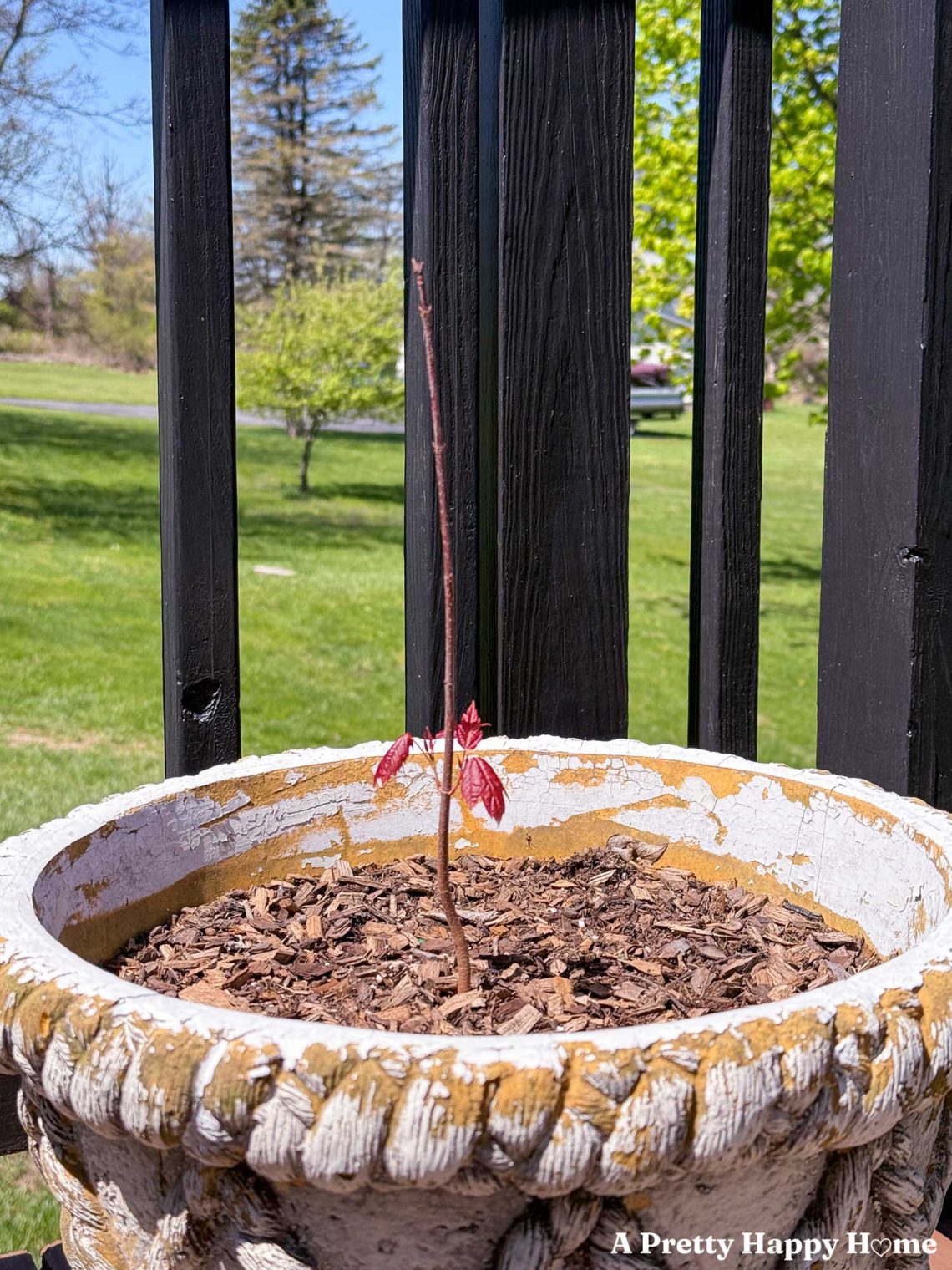
However, curiously, its leaves were red, not green. What in the actual heartwood?!?!
Imagine us scrolling back through our camera roll to find pictures of the tree to confirm that it did indeed have green leaves originally and we weren’t losing our ever-loving minds.
Maple seedlings (and other trees and plants) may leaf out with red leaves in the spring to protect themselves from UV damage while the leaves are toughening up. The red pigment is anthocyanin, the same pigment that you see in the fall when a tree’s leaves change color.
In the spring, if there is red pigment on young leaves, it means the anthocyanin is shielding developing chlorophyll. In the fall, the chlorophyll is breaking down, and anthocyanins help the tree reclaim its nutrients. Nature is so cool.
Other plants that use this “sunscreen” trick include, but are not limited to roses, oak trees, and some tropical trees.
(source)
That Looks Like a Bad Haircut
If you’re wondering why our maple tree has leaves only at the bottom, you’re not alone. It’s giving mullet-style energy: short on top, long on the bottom.
It could be that the top was damaged this winter. It could be that the buds on top haven’t leafed out yet because they aren’t sure it’s safe due to the cool temperatures or harsh sunlight. We have to wait another month or so to see what the tree is going to do. Even if the top was damaged, the tree can survive.
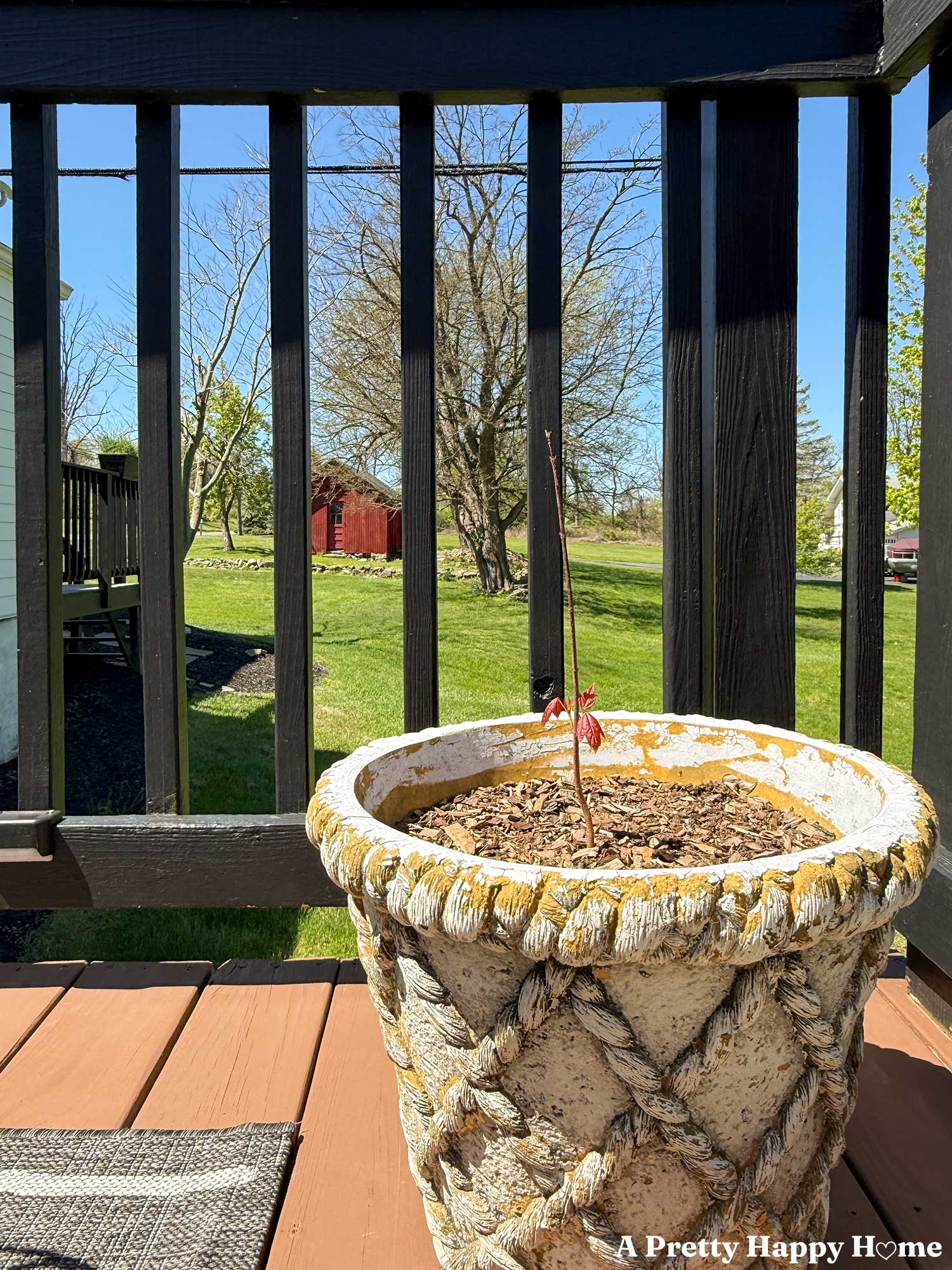
There still is a small chance that this is a Japanese maple, except for the fact that it was green, and the leaf shape leans more toward a regular maple. Time will tell.
Who needs nature TV shows when you have this to watch?
(But send help if we ever decide to name the tree. That’s when we will be too invested!)
Other Tree Seedlings We Are Nurturing
We’ve also planted three other volunteer tree seedlings, an elm, a mulberry, and a black walnut.
American elm trees have had a hard time in the U.S., and many were wiped out by Dutch Elm Disease. We have a robust elm tree in our front yard, and our neighbors have one across the street that is smaller. Since we could be off in our estimate of the elm tree’s age, we’re not sure if our tree is a wild elm that has good genetics or if it is the Princeton variety created in 1922 to be resistant to Dutch Elm disease.
Anyway, this spring, we planted a volunteer elm that came up. We’ll see how it does. You never know, but it would be lovely to have another legacy tree to either plant or pass on.
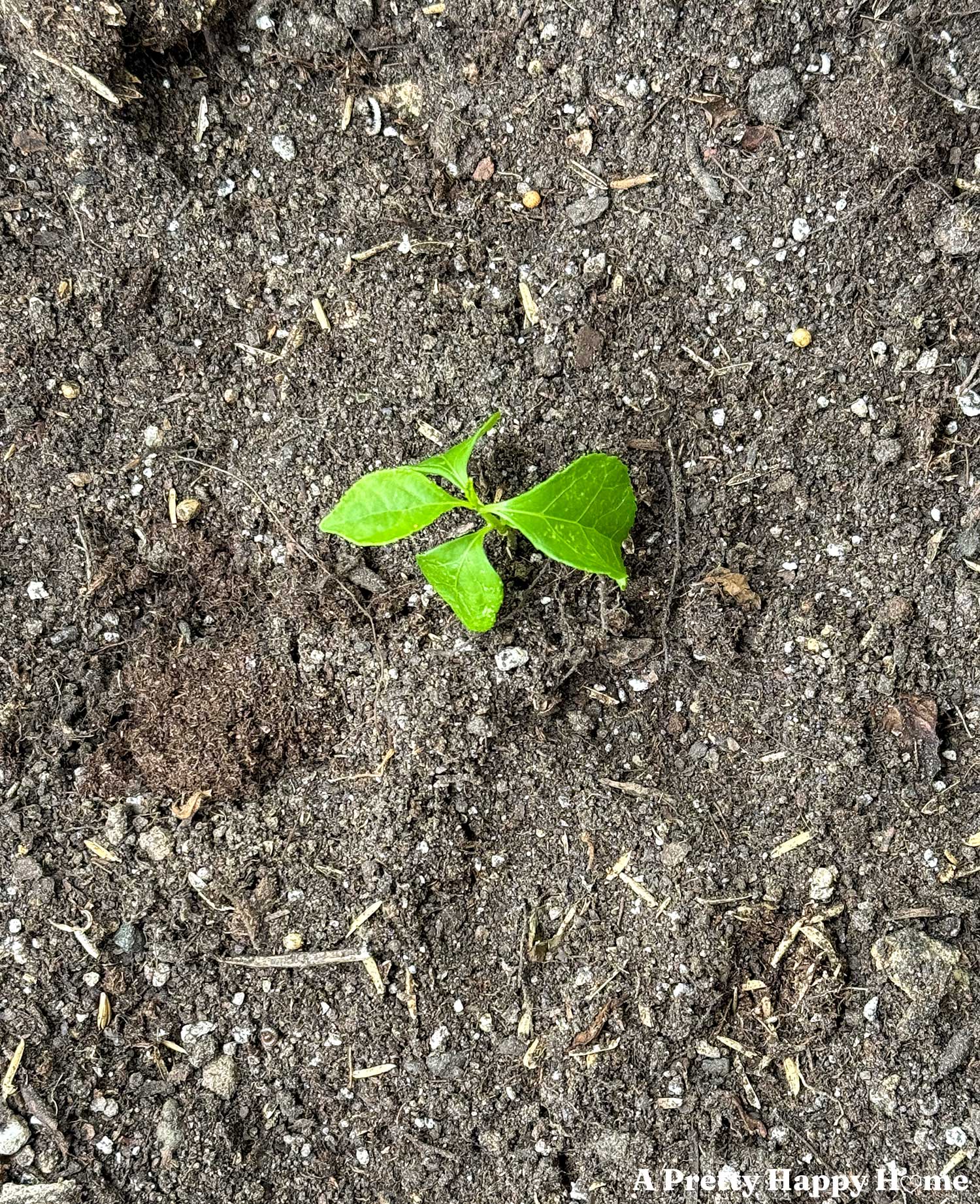
Moving on, last fall, we planted a mulberry tree seedling in a pot on our front porch, and promptly forgot about it.
It wasn’t until I took a picture to figure out what was growing in this pot that I remembered Handy Husband had taken a mulberry start directly from our mulberry tree, and planted it last year.
So, good news – it survived the winter! Even better news – we remembered we have it! It also has green leaves, so it isn’t gaslighting us into thinking it’s something else.
Our mulberry tree (shown below) may need to be taken down in the next decade. It has a large dead branch and a split trunk, which doesn’t bode well for its longevity. The trunk split because a vine was allowed to grow up the tree.
It would be a beautiful circle of life moment if we do have to cut it down to replace it with one of its seedlings.

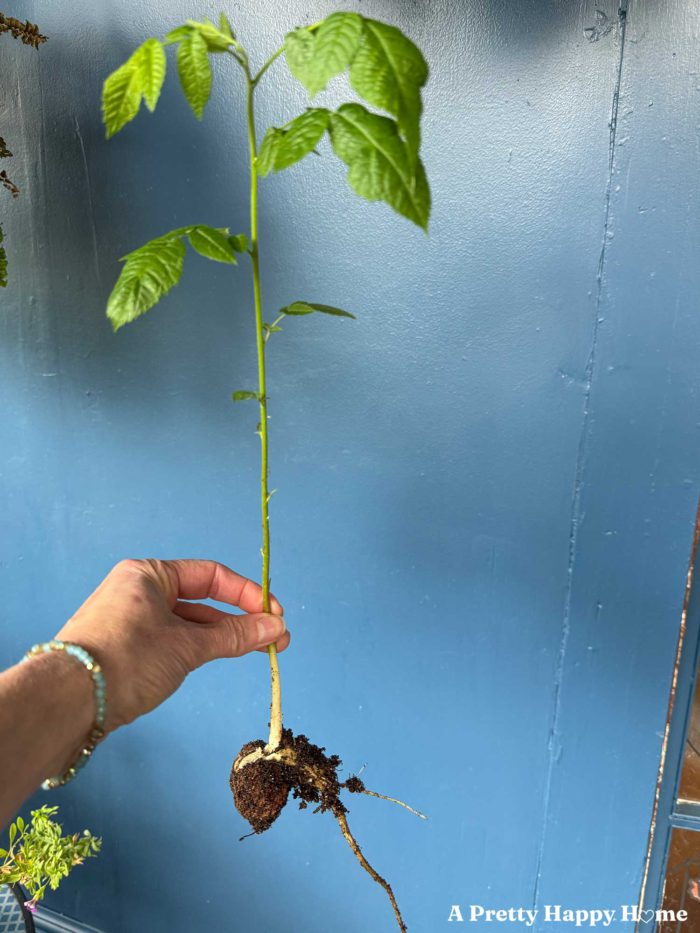
Last, but not least, we are growing a black walnut…in our house…accidentally.
It would appear that a squirrel buried a walnut in one our porch planters. Then, I brought that planter inside to winter on our sunporch. Fast forward six months, and a tree started growing in the planter. Interestingly enough, it is bigger than the maple and mulberry seedlings that are older.
I’m not sure if we are going to try and keep this one. I’m not as emotionally invested in it.
When Does a Seedling Turn into a Sapling?
I started off calling our maple tree a sapling while drafting this post, but fortunately researched the difference between seedling and sapling.
The definition is a little along the lines of “you know it when you see it,” which was not helpful. Ha! Generally speaking, the internet tells me a seedling becomes a sapling when it is around 3-feet tall or has a trunk diameter of at least one inch.
Our maple tree is only 12 inches tall and the rest are little squirts, so they are firmly in the seedling category.
Have you planted any trees lately? I’d love to know how they are doing. Comments are like deep roots. They make me feel connected to you. You can comment here on this blog post, email me here, or reach out via direct message on Instagram or Facebook.
Happy Planting Season!
Science Sources:
Don’t take my word for it. I’m not a scientist. You can read these science papers if you want to learn more about anthocyanins.
Anthocyanins in Vegetative Tissues
Thanks for spending a portion of your day here. I hope you had fun, and maybe learned something new. If you’d like another blog post to read, try one of these gems.


2 Comments
Laura L
C’mon! I think he totally deserves a name! If we are all going to be invested in his growth over the next few years then he should absolutely have a name. 🙂 I propose Sir Mapleton. LOL
annisa
Sir Mapleton sounds like a dignified choice befitting a tree of its stature!