How to Reuse Old Lime Mortar On Your Stone Foundation
If you have a historic stone foundation that needs repointing, you’ve probably already figured out that you’ve drawn the short straw and have to chip out the old lime mortar from the foundation to repoint with fresh lime mortar. If you’re wondering how to reuse that old lime mortar to make new lime mortar, or even if you can and should, you’ve come to the right place.
I have some recent experience with that.
Someone has to be the test subject. Might as well be me.

Important consideration for reusing old lime mortar:
Old lime mortar can only be reused as sand. Over time, lime mortar essentially turns into limestone, so it no longer has the active components that will make it bind together again. You have to add new lime to make it bind.
To make sand out of old lime mortar, it must be crushed up.
There are two primary ways of crushing up lime mortar. The hard way and the harder way. There’s also a third, ideal way that may be out of the reach of many homeowners. Don’t worry. I’m still going to tell you about it.
Concrete or Cement Mixer Technique:
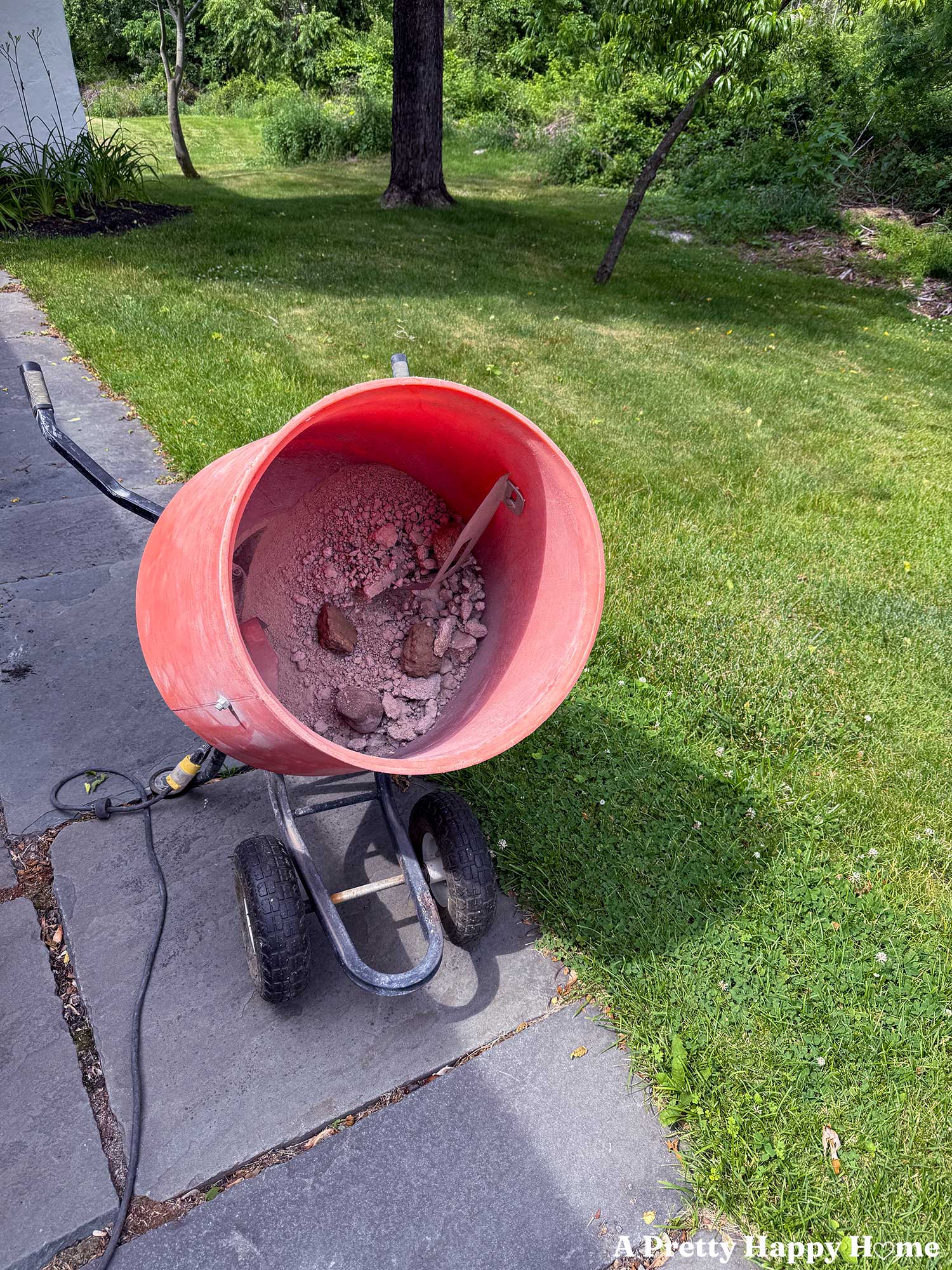
You can put chunks of old lime mortar in the tub of a concrete mixer with a round rock, turn it on, and let the spinning rock do the work of crushing the mortar for you.
It does take time, and I’ve only had mixed results with this technique. But to be fair, according to this resource, I did not use a large enough rock. I need to try it again…and see if I have a larger round-ish rock.
Pound It By Hand Technique:
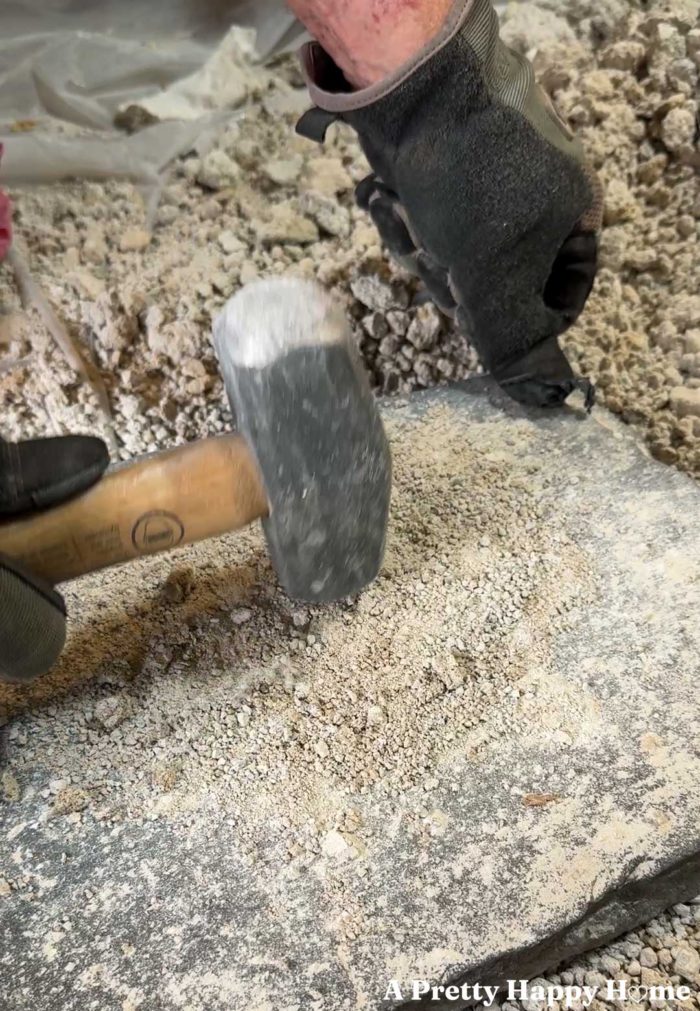
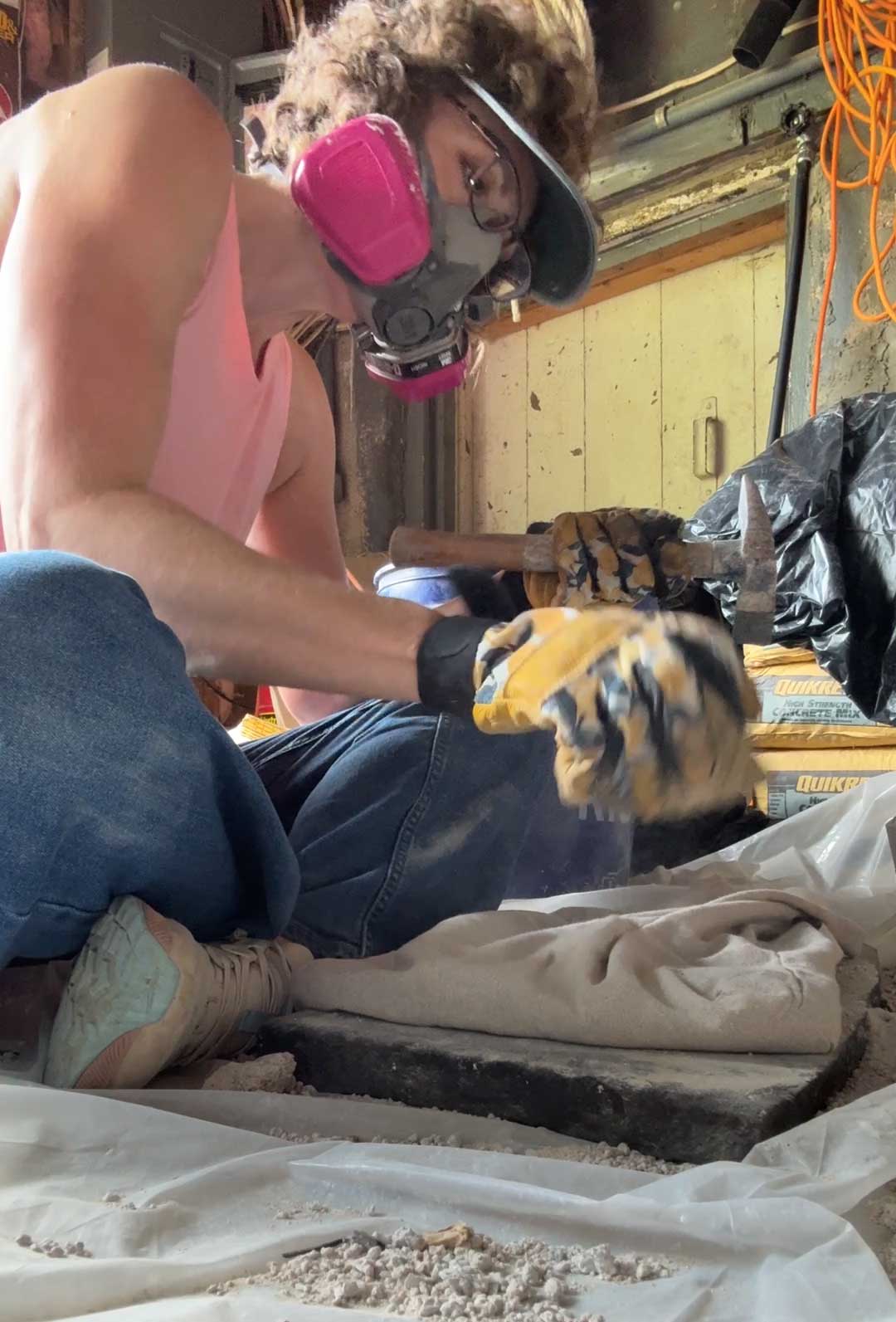
It’s tedious and requires a lot of elbow grease, but hammering the chunks of lime mortar back into sand does work.
I’d recommend placing the mortar in a cloth bag to keep it from flying when you hammer it. You will destroy the cloth bag, though. Historically, a tightly woven burlap bag was used. Instead of hammering on the ground or our concrete garage floor, we hammered the mortar on a flat piece of flagstone.
The type of hammer matters less than picking one that you can swing for a long period of time. My husband is strong enough to use a small sledgehammer. I used a masonry hammer. Alternatively, you can use a rock as a hammer.
Industrial Grinder Technique:
A mortar mill or a roller mixer is a tool with rotating iron rollers that are designed to crush lime mortar back into sand so that it can be reused. Professional masons who do a lot of this work probably have one. You can find them online or from places that sell lime for historic masonry purposes. Whether or not it’s worth it to invest in one is up to you. You may be able to rent them, too!
Make sure to sift your mix.
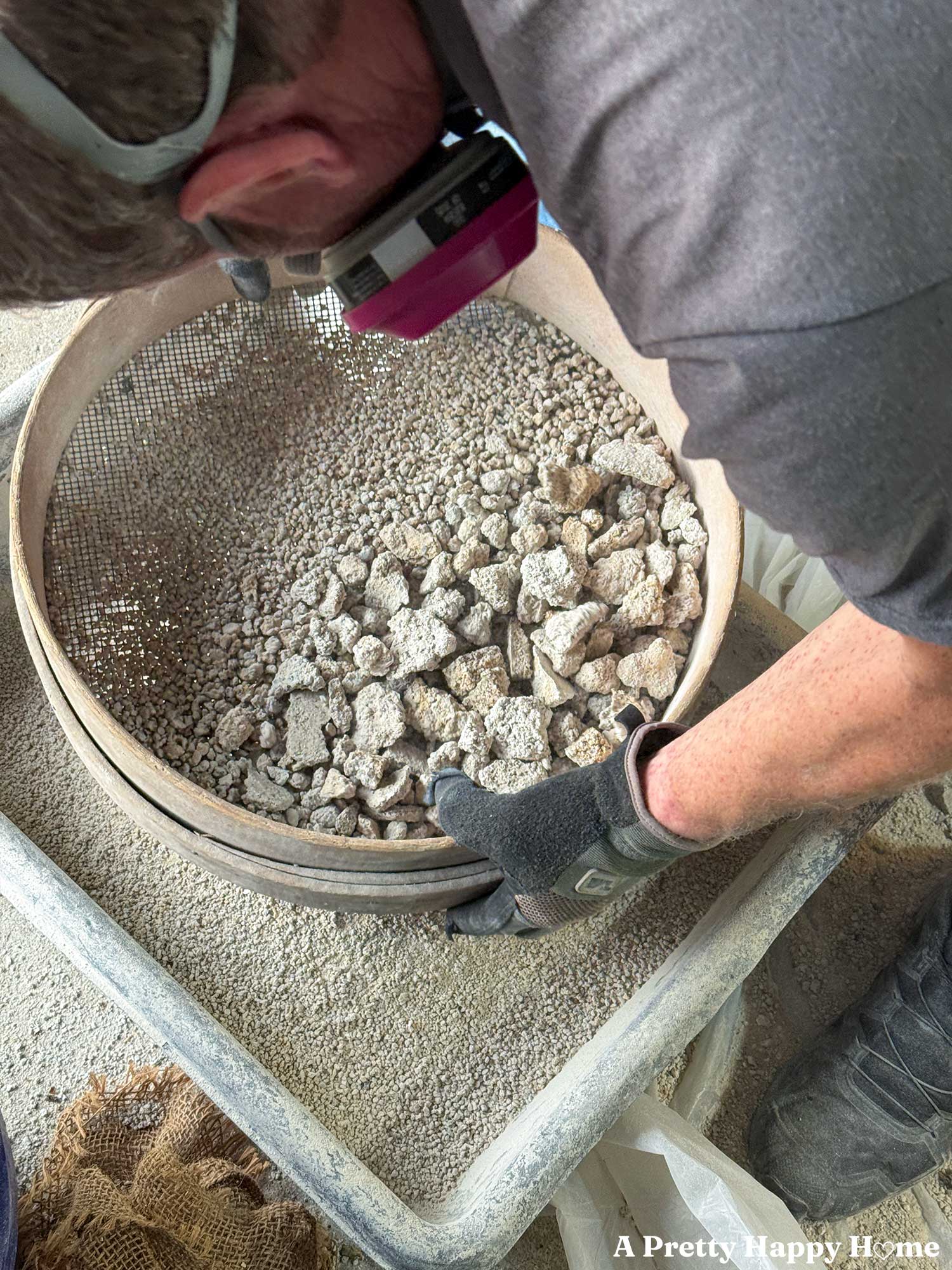
Using a #4 sieve or screen, you can do a presift to automatically make the pile of lime mortar you have to crush smaller.
But definitely sift the mix after you crush it up. Either discard the pieces that don’t go through the sieve or put them back into the pile to be crushed again. (Spoiler, you’re going to sift it one more time before you’re done, so keep reading for that.)
Remember, you don’t want all fine sand to repoint a stone foundation. You want a well-graded mix, which means a variety of sizes and angular shapes.
Using sand that is all fine with rounded edges will not create a structurally sound mortar. Think about a bag of marbles and how they can slip and slide against each other. That’s what your lime mortar will be like if you mix it entirely with fine sand. Now, your well-graded mix will have some finer sand, and that is good because it’s going to be able to fill in the tiny nooks and crannies around the larger bits.
Wash your newly crushed lime mortar:
Per the advice of Limeworks.us, you’ll want to wash away the lime dust (remaining lime particulate) before you reuse the sand. The reason is that you don’t want your new lime mortar to bind to this lime dust; you want it to bind to the sand. The old lime is also a water hog. It will suck up more water than your mix will need, which can later cause shrinking when that water evaporates.
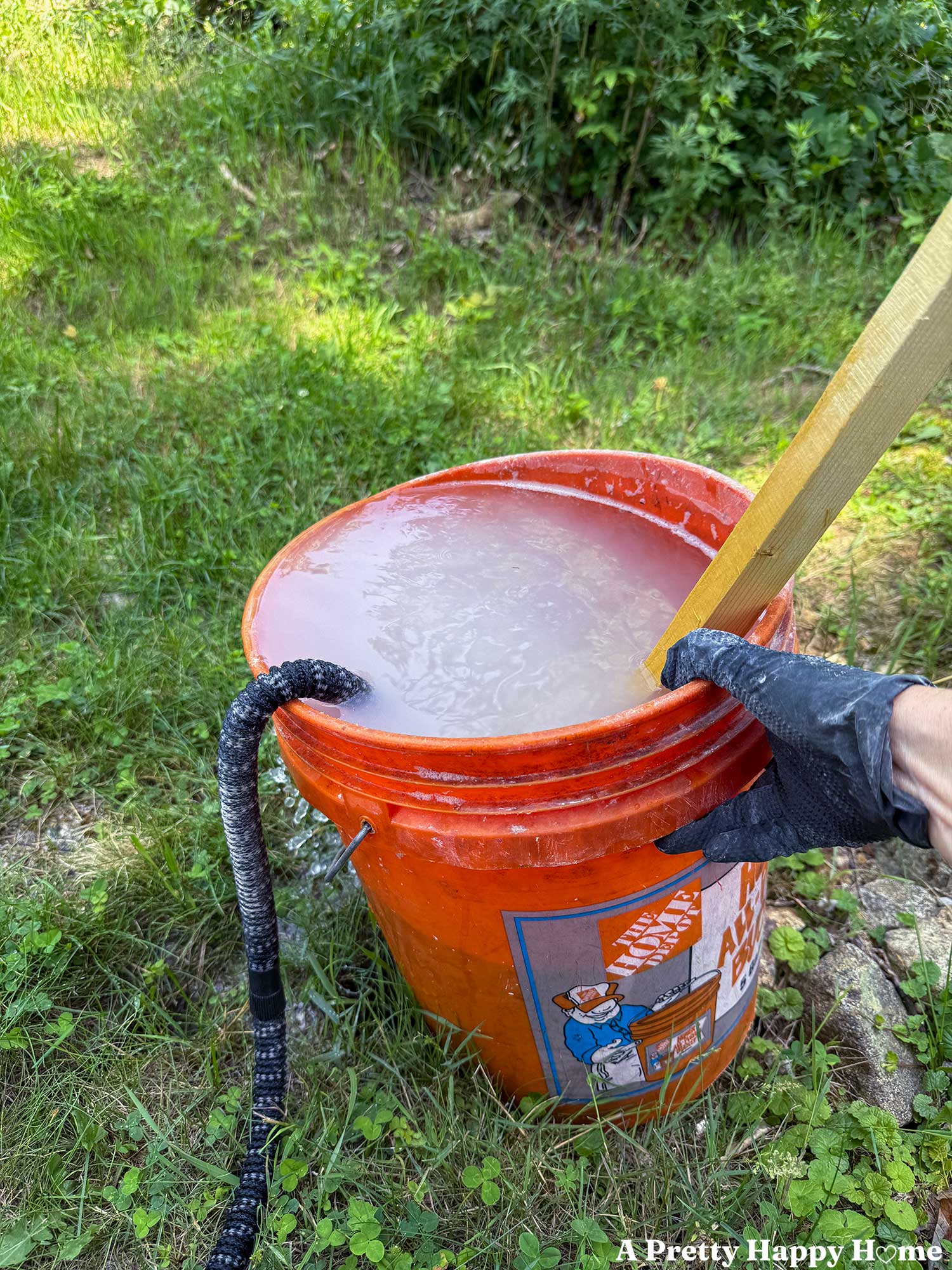
To remove it, you’re going to put your crushed up mortar in a 5-gallon bucket, but don’t fill it up. You need room for water. Shove a hose to the bottom of the bucket. You want the water to force its way to the top of the bucket. Agitate the mix while the water is doing its thing.
The lime should rise to the top while most of the sand sinks. Let the milky water spill over the bucket until it is fairly clear. You’re trying to get rid of the milky lime, not the sand. If your sand clumps together like wet beach sand when you squeeze it in your fist, you should be done. It took about 15 – 20 minutes per bucket for us to get “fairly clear” water, and it was easiest to check it by holding our hand under the water spilling out of the bucket.
An unintended benefit of this process is that it also washes away any foreign matter, like mulch, as this mortar came from an exterior location next to a flowerbed.
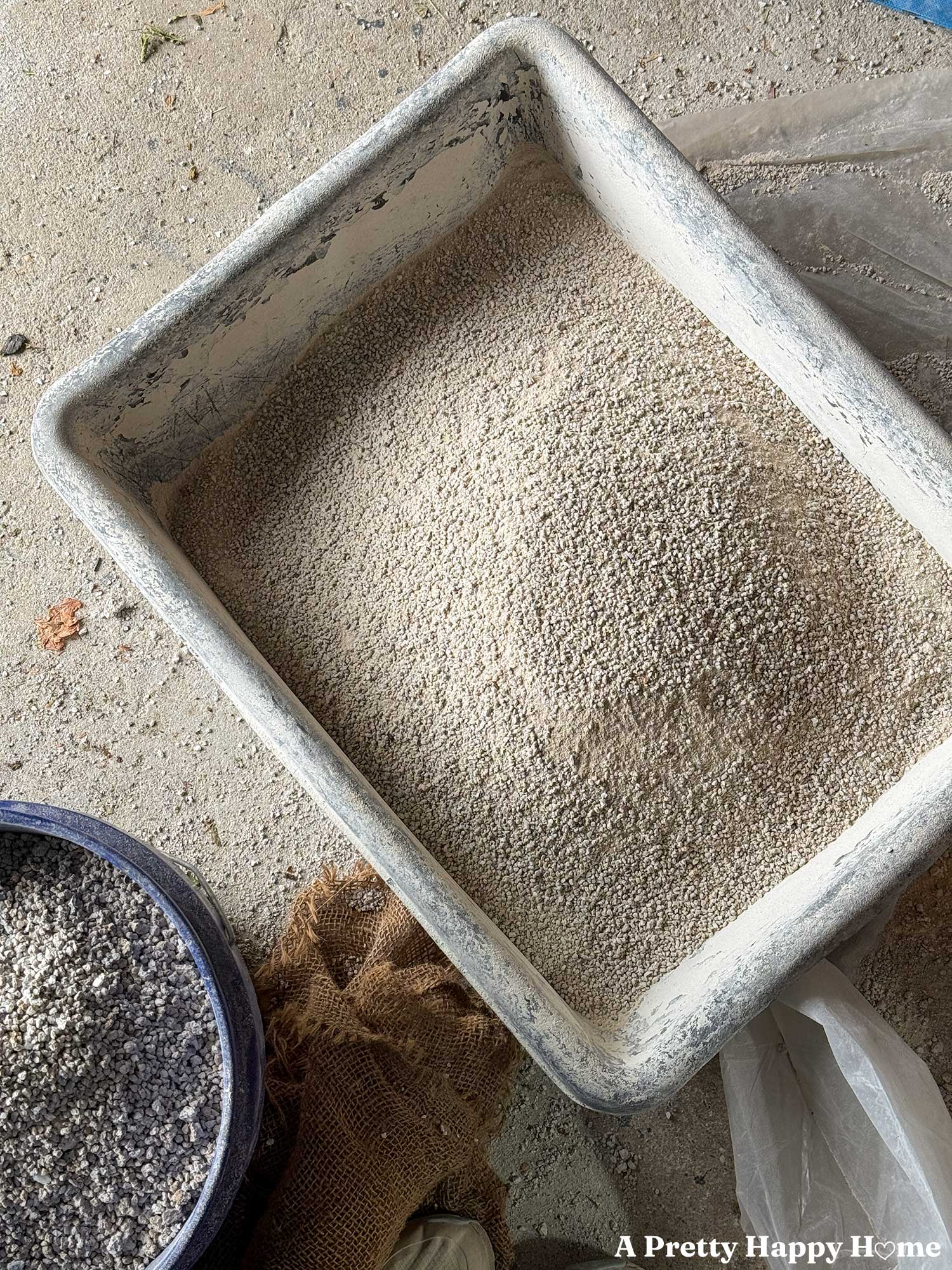
Spread the remaining sand on a tarp in a thin layer to dry in the sun.
When the sand is dry, sift it through a #4 sieve. You’ll keep anything that goes through the sieve, and discard anything that doesn’t.
When not to reuse old lime mortar:
Do not reuse old lime mortar to make new lime mortar if it contains Portland cement.
If you’re not sure if it has Portland cement in it or not, it’s best not to reuse it on your stone foundation.
Portland cement, a primary component of modern mortar and concrete, is too hard for a fieldstone foundation. If your mortar is harder than your stone, it can cause the stones to break.
Portland cement also traps moisture in a stone foundation. A historic stone foundation made with lime mortar is designed to breathe, meaning it takes on and releases moisture or humidity.
Most people are disposing of the old lime mortar in a construction dumpster or taking it to a recycling facility that accepts masonry debris.
What else can you do with old lime mortar?
These ideas are assuming it doesn’t have Portland cement in it.
If you don’t want to crush it back into sand, you can use old chunks of lime mortar that you remove from your stone foundation for fill elsewhere on your property.
It can be used as aggregate for limecrete (lime concrete).
Pebble-sized bits of lime mortar can also be used as a very slow soil amender if you have highly acidic soil. The limestone will gradually raise the soil pH and introduce calcium over many years. That’s not my area of expertise, so you’d have to research how and how much before you attempt this type of reuse. Feel free to report back so we can all learn!
Tools needed to crush old mortar:
- masonry hammer or mini sledge hammer
- a rock or other flat surface to pound the mortar on
- concrete or cement mixer
- cloth bags or tightly woven burlap bags (optional)
- a dropcloth or tarp to go under your pile of mortar to make clean up easier
- mortar tub or buckets to hold sand when sifted
- 4mm sifter
- work gloves
- respirator
- safety glasses
Resources for more lime mortar information:
Lime Mortar FAQs for Stone Foundations (what to use, why that type of lime, how to mix it, tools needed, etc.)
Natural Hydraulic Lime Supplier Directory for the U.S. (lime appropriate for stone foundations)
Reconstruction of Historic Lime Mortars and Render (detailed step-by-step process from the pros)
Will we continue to reuse our old lime mortar? Never say never, but likely not. I’d like to think we’re committed to some degree of authenticity when it comes to old house topics, but maybe not to THAT degree. It’s not so much about the physical effort, but the amount of time that it takes to crush and wash the old mortar compared to the current, relatively low-cost price of sand. Also, we are running out of areas on our stone foundation that we are certain don’t contain Portland cement.
We don’t regret trying this technique out, though. We learned some new things about the science of lime mortar. We also walked a mile in the shoes of homeowners before us, and decided that we’ll stick with the current shoes on our feet. Grateful for these modern times!
Do you do anything the old school way? I’d love to know. You can comment here on this blog post, email me here, or reach out via direct message on Instagram or Facebook.
Happy DIYing.
I’m grateful you’ve spent part of your day here. If you’d like other lime mortar resources, check out one of these posts:
Lime Mortar FAQs for Stone Foundations
Where to Buy Natural Hydraulic Lime (NHL) in the U.S.
Reconstructing a Fieldstone Wall: Part 1, The Plan
*affiliate links in this blog post*


You May Also Like
Reconstructing a Fieldstone Wall: Part 2, Demo